
The plan
Blending an urban vibe with nature’s tranquility.
Here is a place to put down roots, to land, and to invest in a future closer to nature. A place to make time and space for exploring a different way of living, whether that's building your own tiny cabin, learning to grow food, planting trees, or helping shape a Third Place.
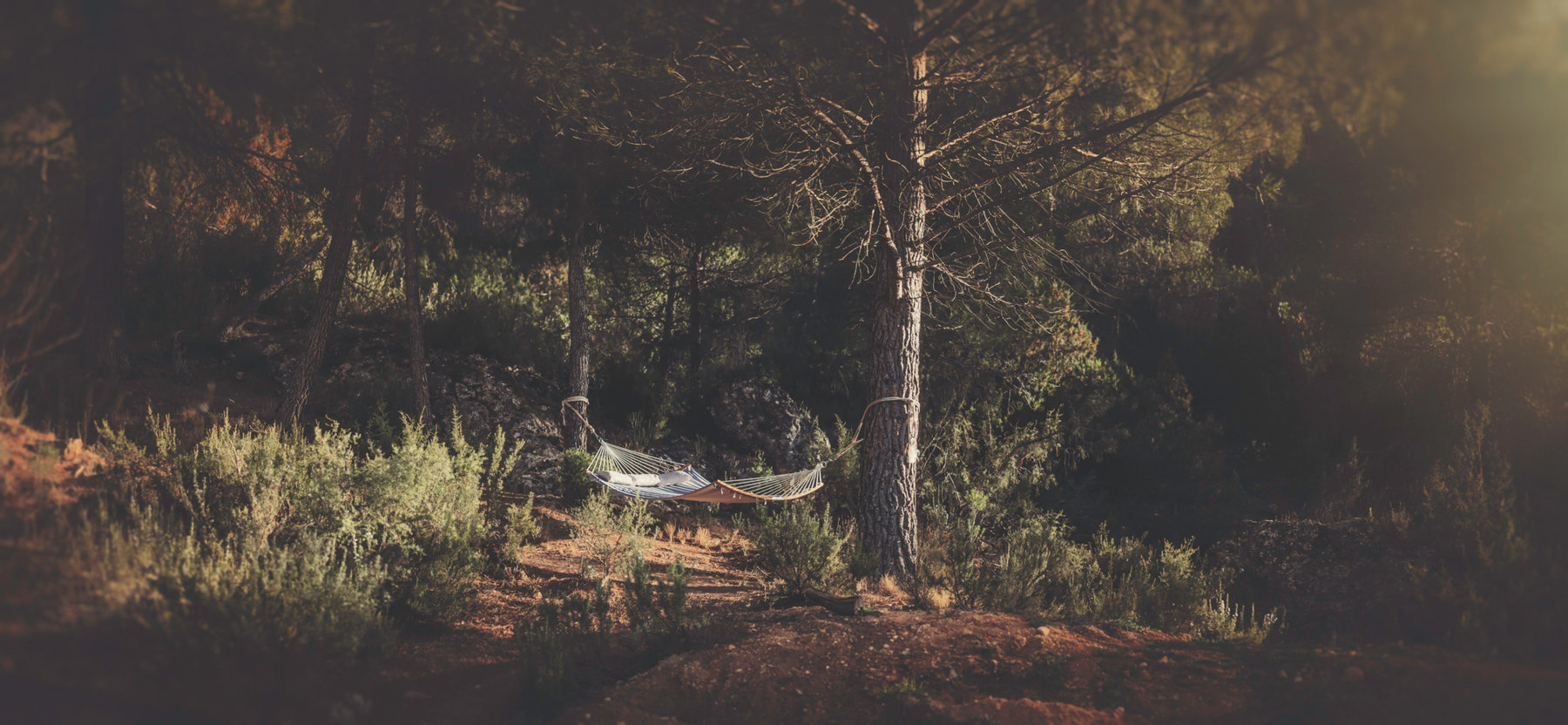
A place you can always return to. To be outside. To eat from the garden. To focus deeply on a creative project. In our case, that's often photography or filmmaking. We've learned that creativity thrives in nature. Focus isn't something you force, it emerges when you leave distraction behind and immerse yourself in the natural world.
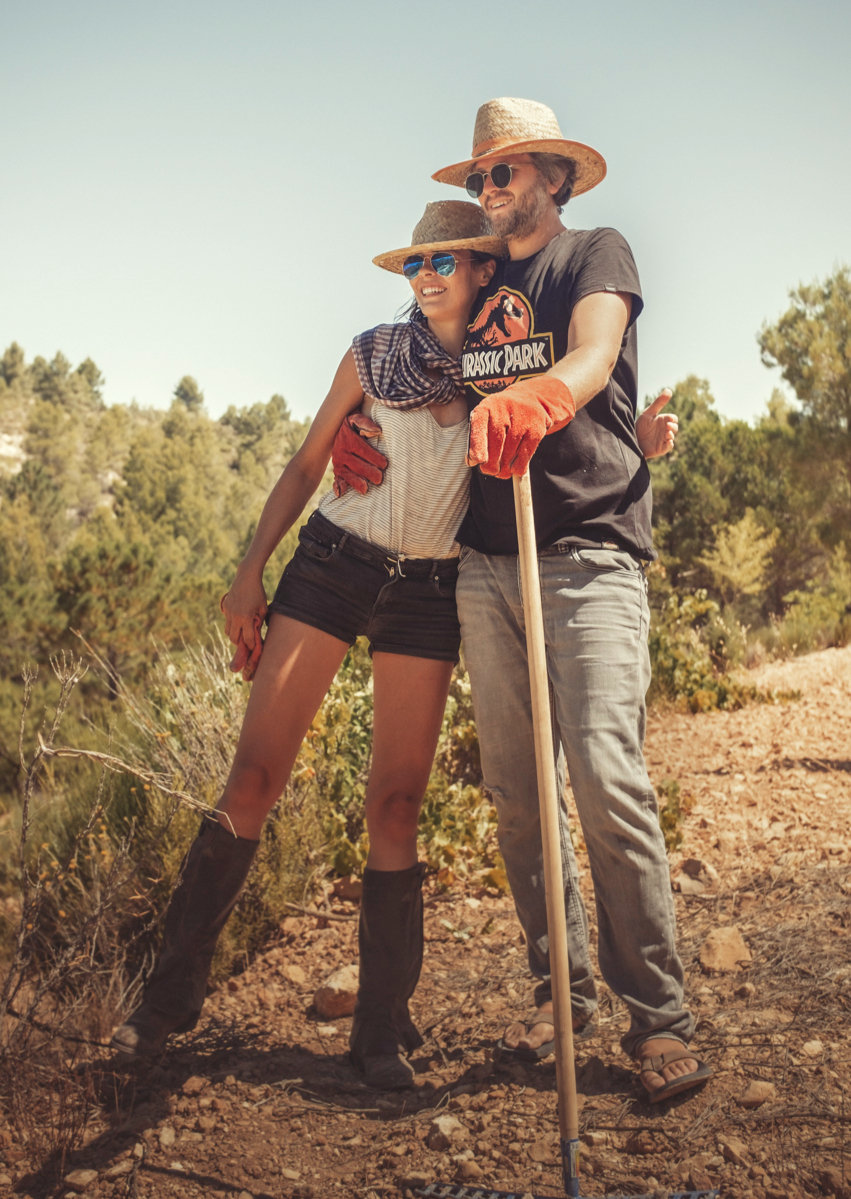
We're both 44 and have been together for over 24 years. Our work has always been location-independent, taking us back and forth across the world and increasingly to Europe. Not long after graduating, we spent extended periods living in permaculture education villages. Those experiences introduced us to a different way of life, one with more freedom, greater self-reliance, a stronger sense of community and the kind of rest that sleep alone can't provide.
More and more people seem to long for a life like this. Yet turning that longing into reality can feel overwhelming. Buying land or going off-grid is a big step. From experience, we've learned that it's much easier to join something that's already taking shape than to start entirely from scratch. That's how this place came to be.
It is a secluded place in nature where people can plug into a way of life many dream of, but few can build on their own. It is not an eco resort, a campsite or a co-working space. In its core it is a Third Place, a place where nature, creativity, entrepreneurship and community grow together.
That's why we offer new neighbours, makers and co-investors a gentle off-grid landing. Alongside the peace, space and natural beauty that were already here, there's now spring water, reliable electricity and Starlink internet. Enough comfort to feel at home, without losing the feeling of being immersed in nature.
Third places are the anchors of community life. They encourage connection, creativity and a sense of belonging by creating space for informal encounters and shared experiences. Third place on Wikipedia
- The valley foundation Board members = stakeholders
- AHOOHA that’s us Media production and focus huts
- The neighbours Campsite with two domes
- A guide Mindfulness walks and forest bathing
- A maker Furniture studio or jewellery workshop
- Your place? A retreat, a remote studio, an open-air cinema
- Regulars join part-time through one of the stakeholders
The land
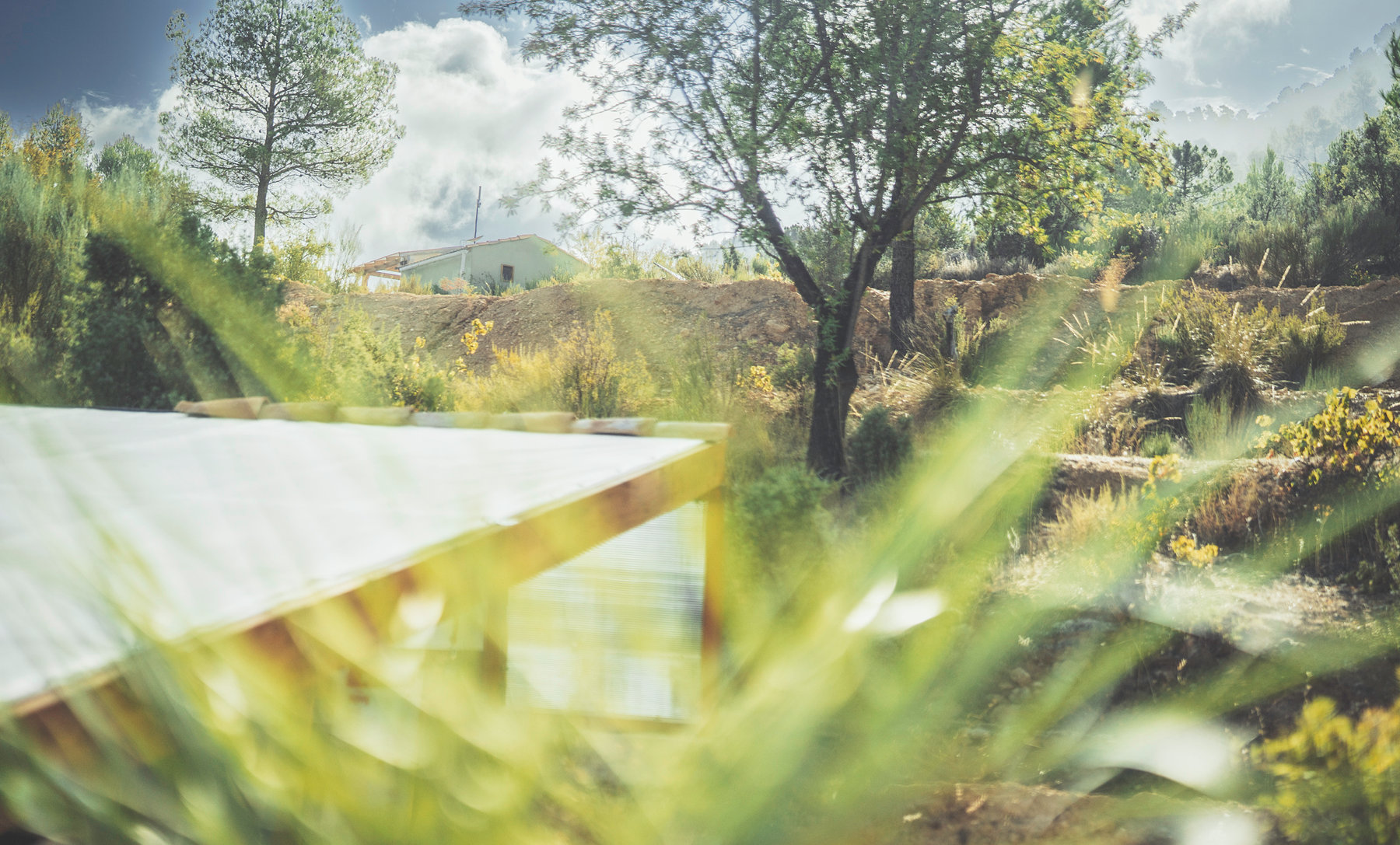
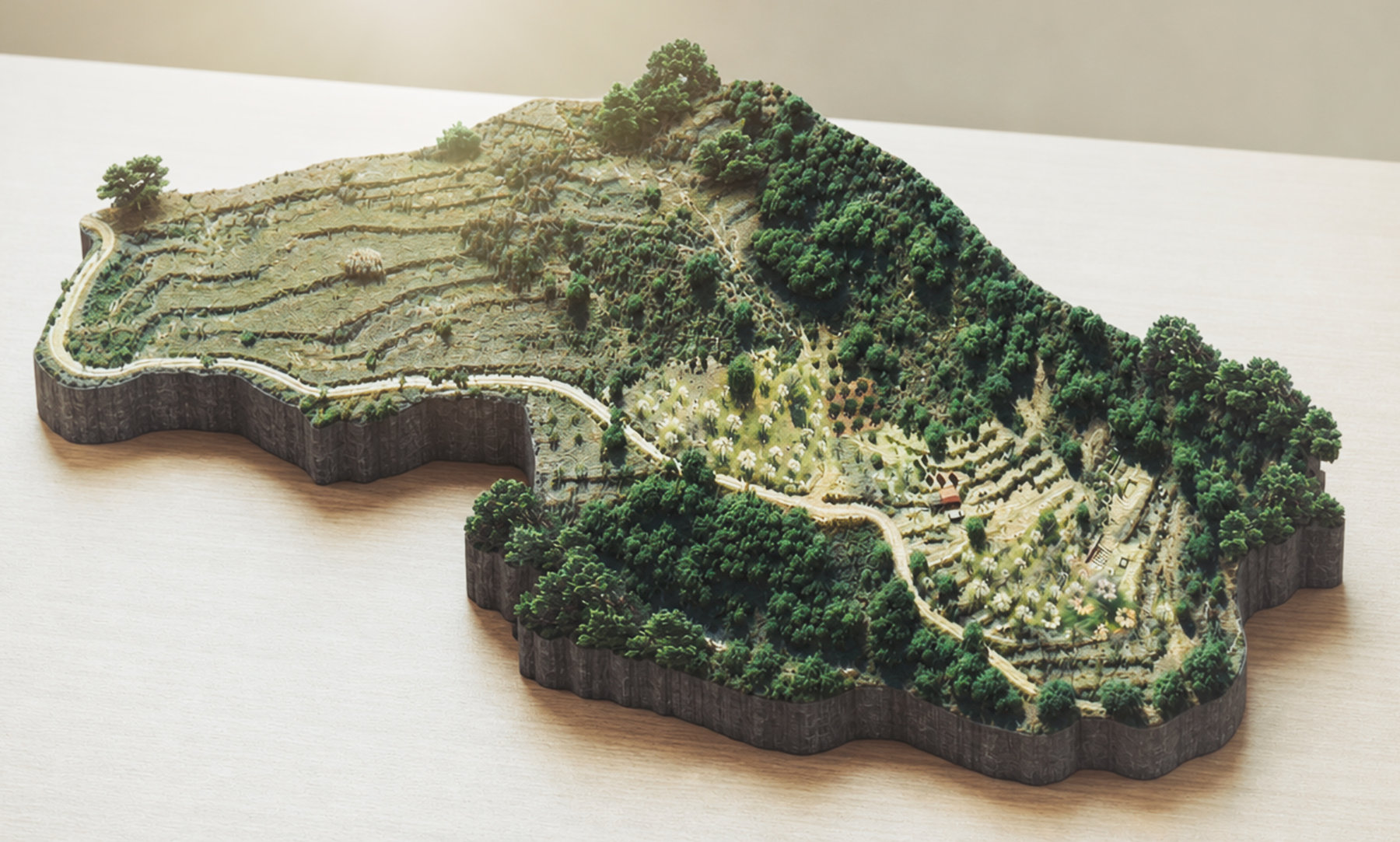
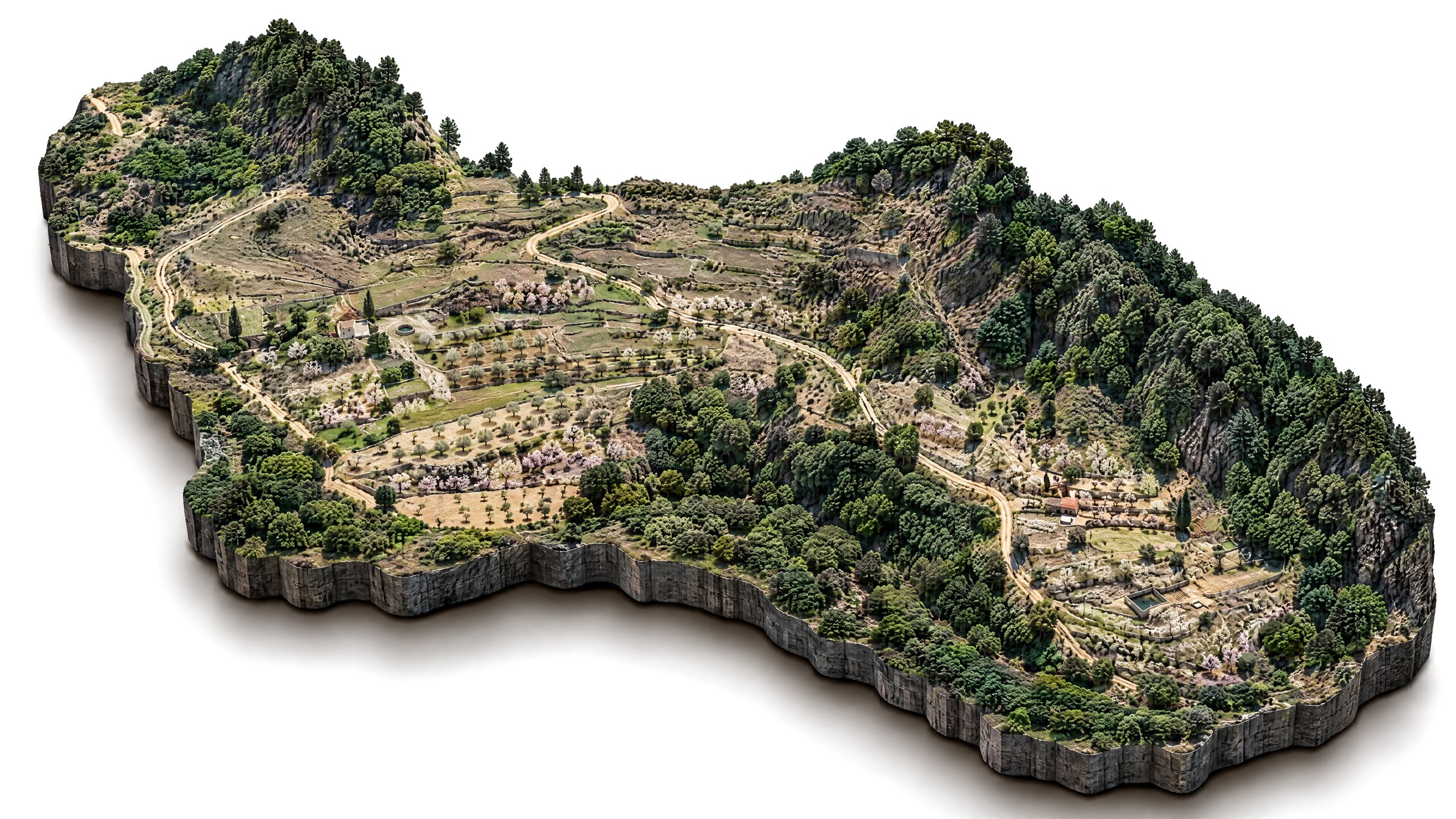
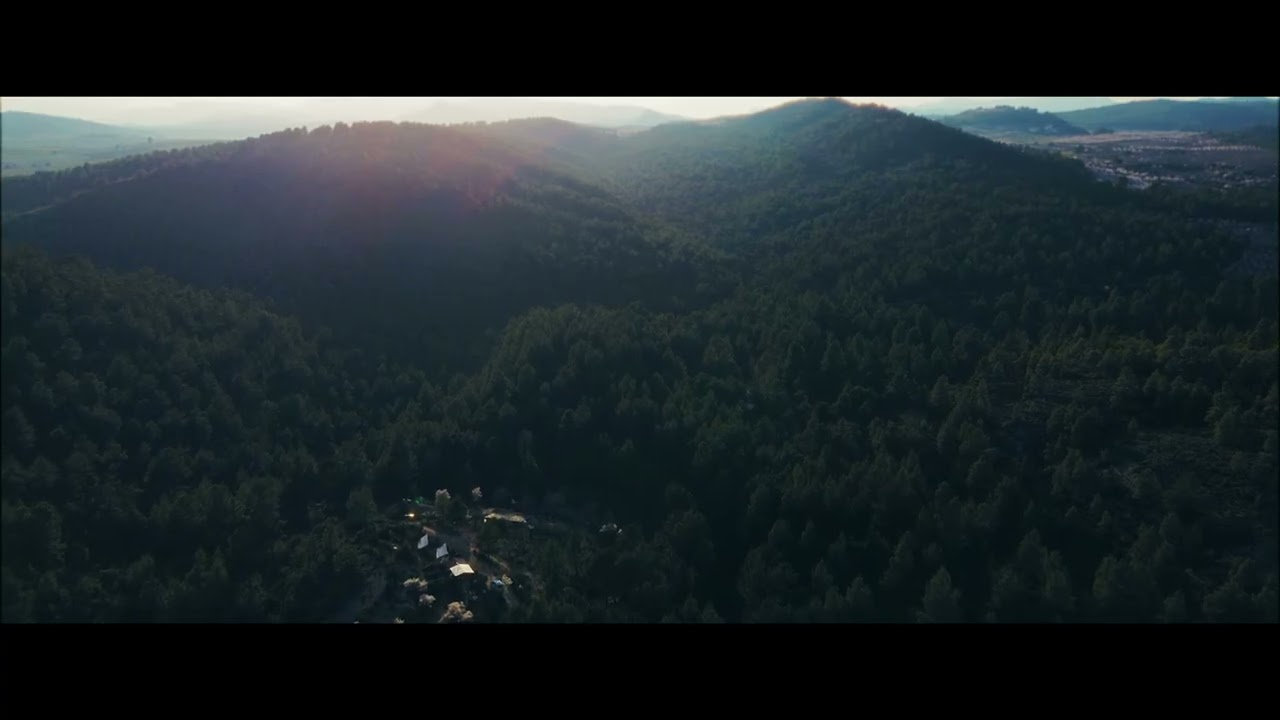
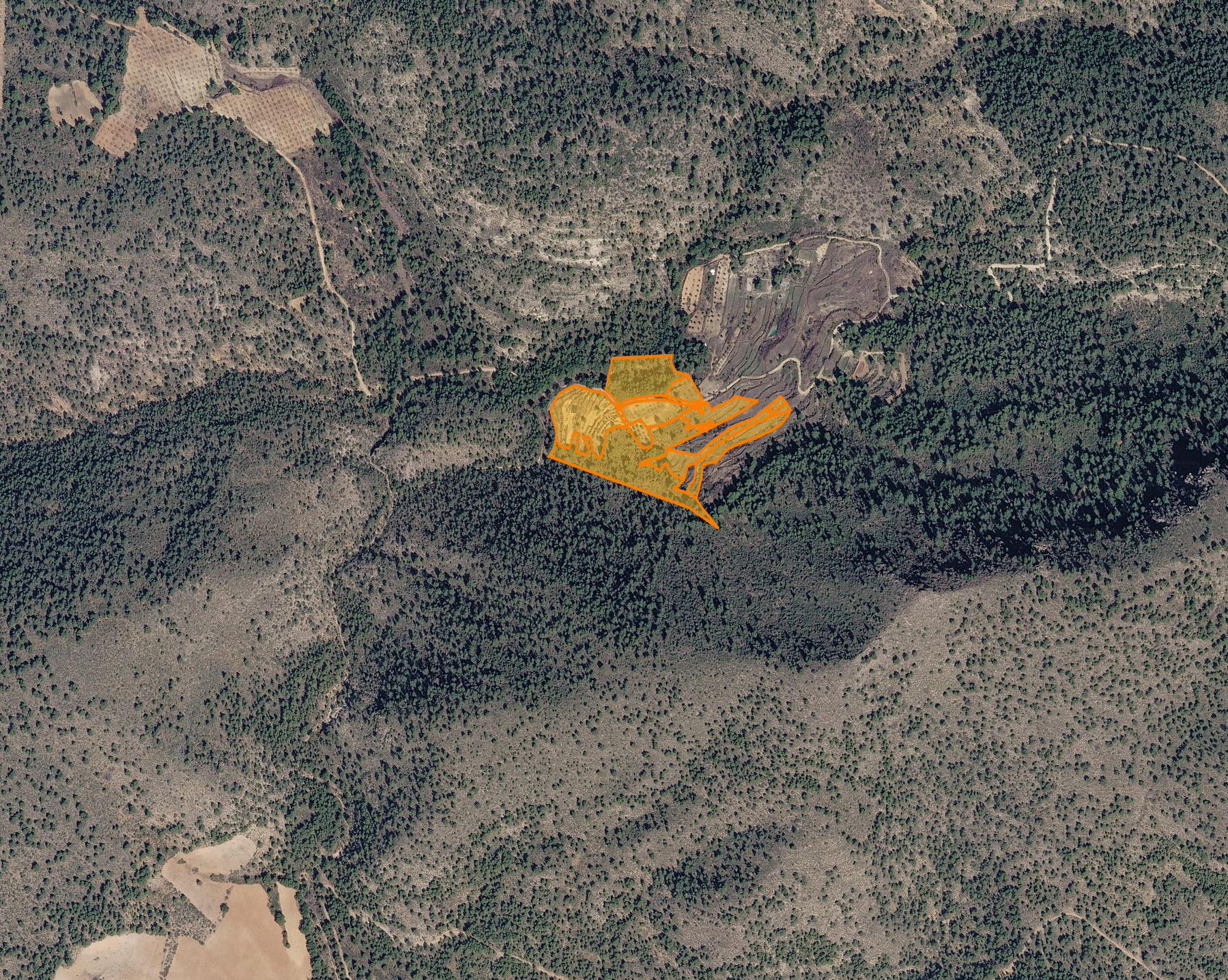
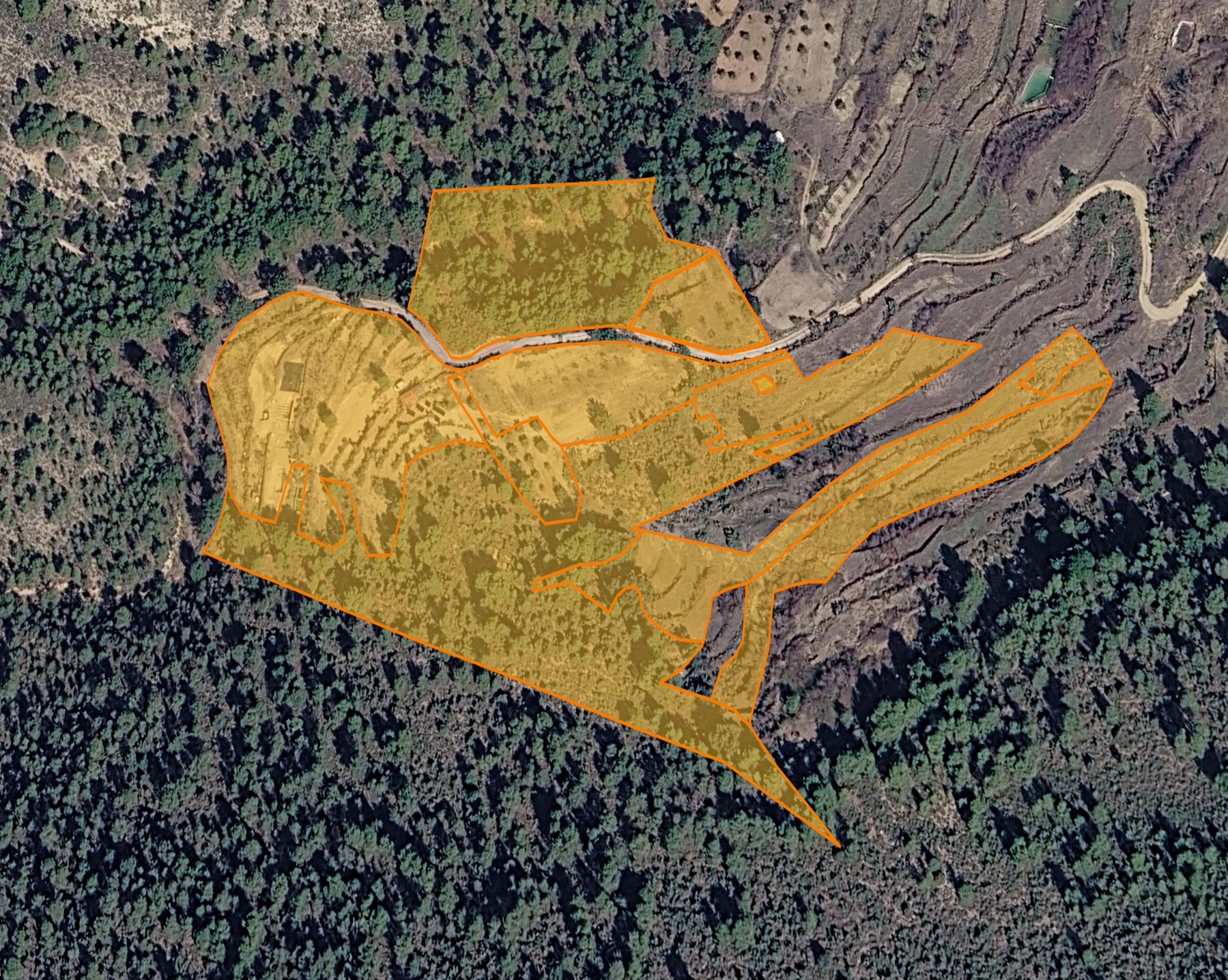
Around 38,000 m² in the mountains near Riópar, at roughly 1,000 metres.
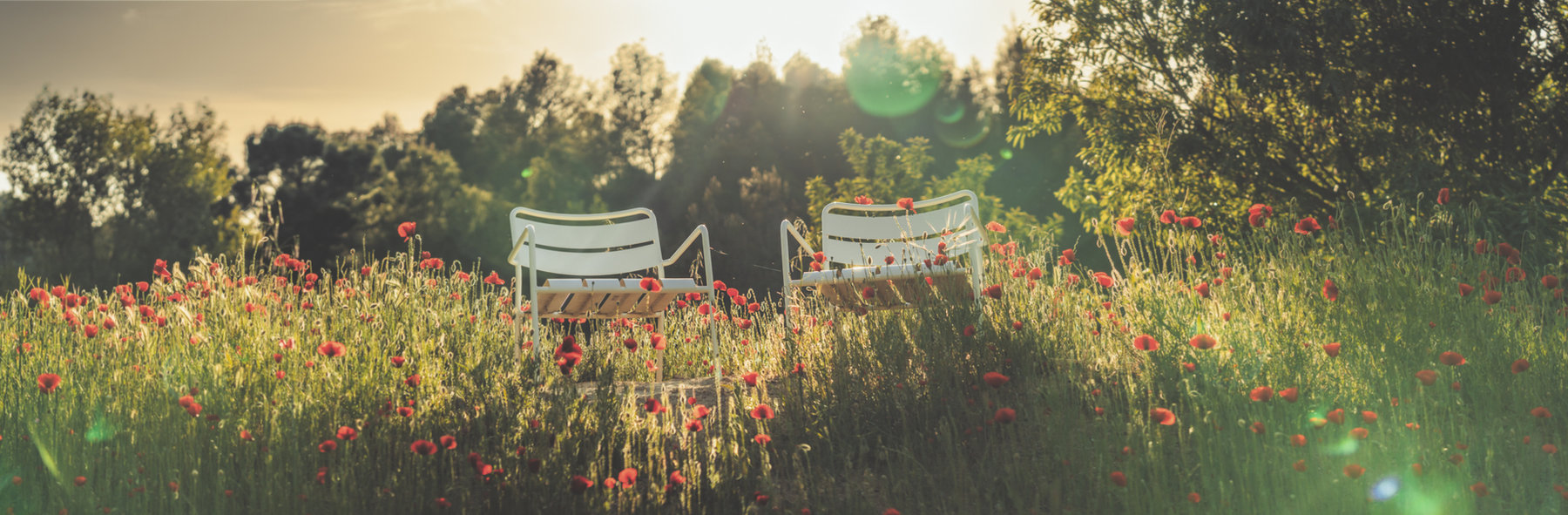
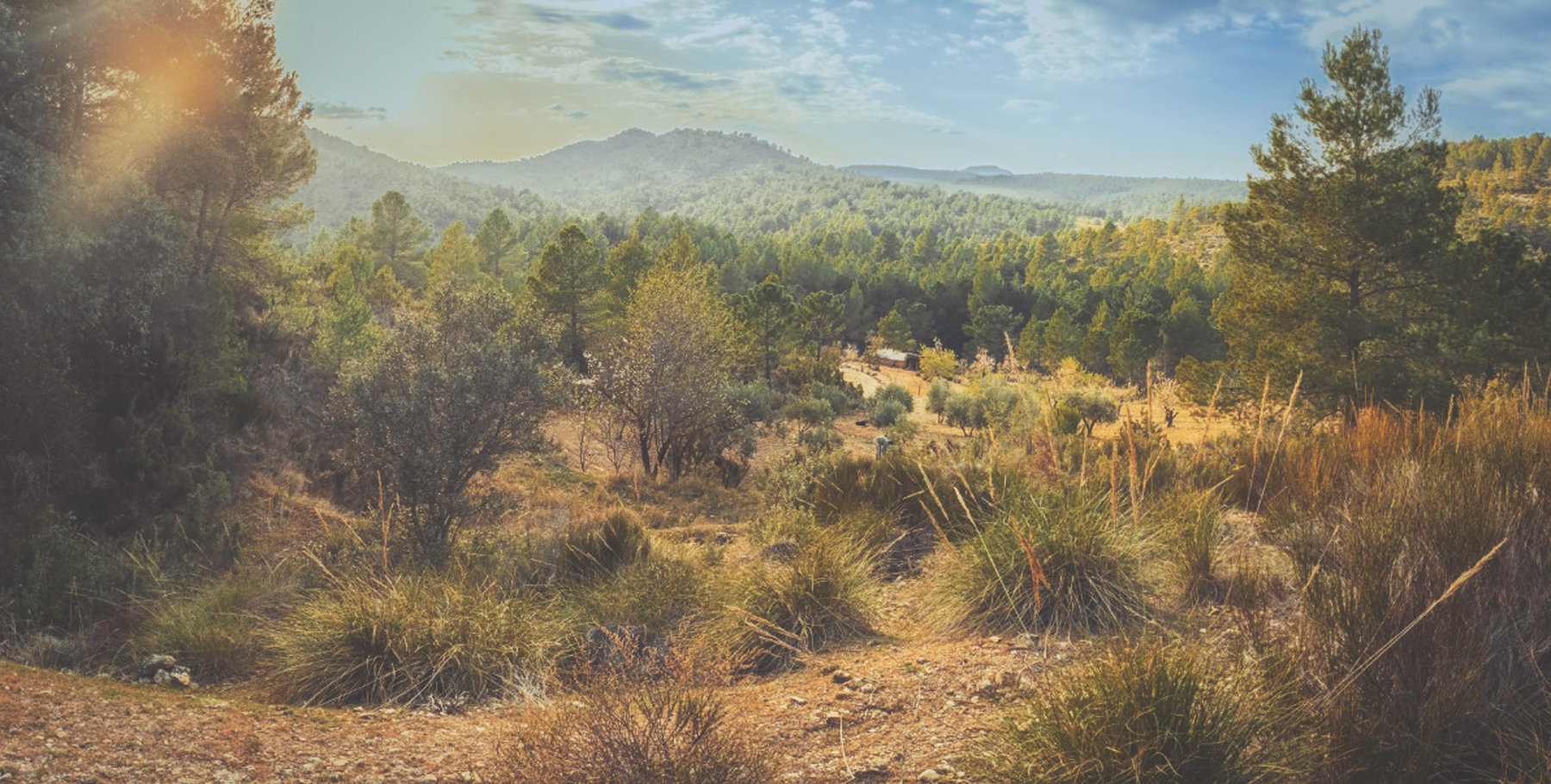
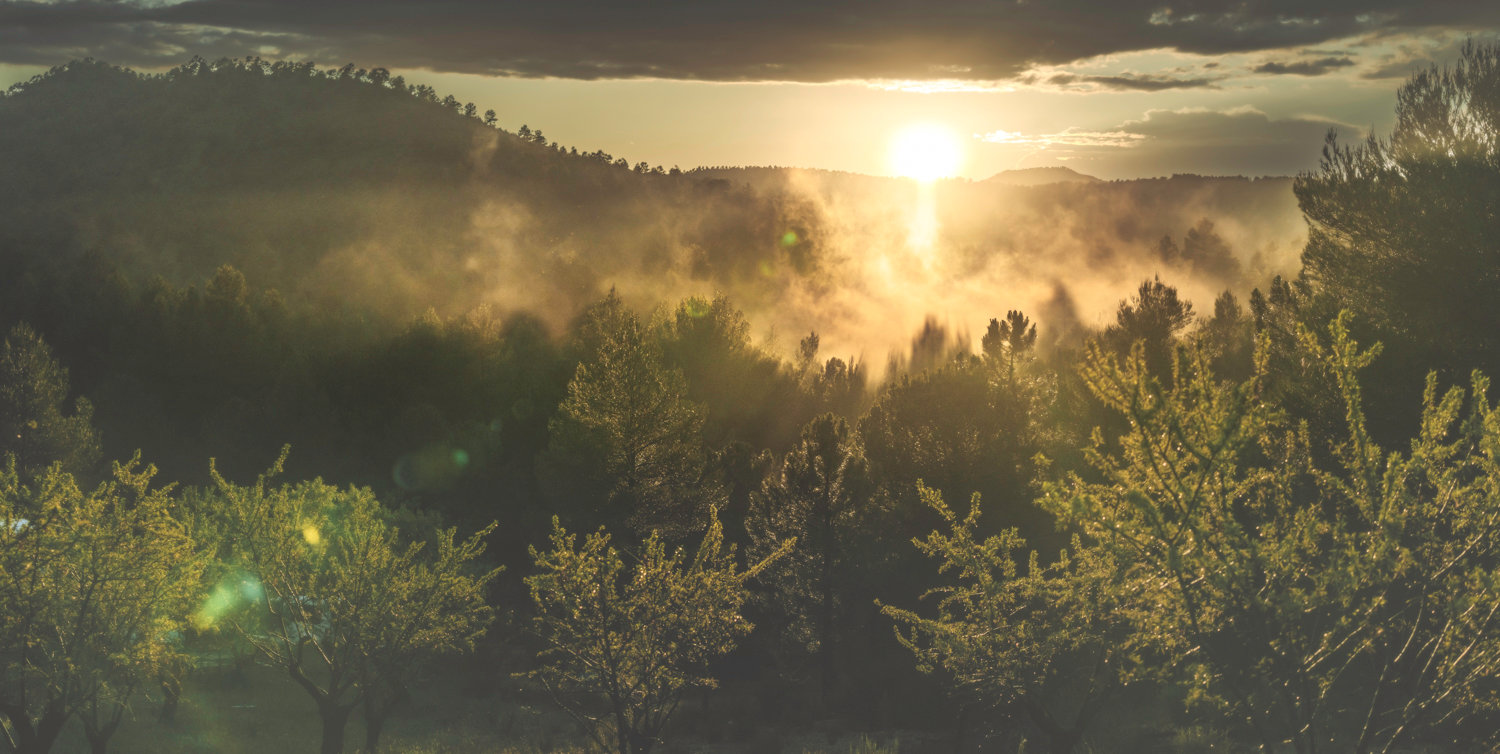
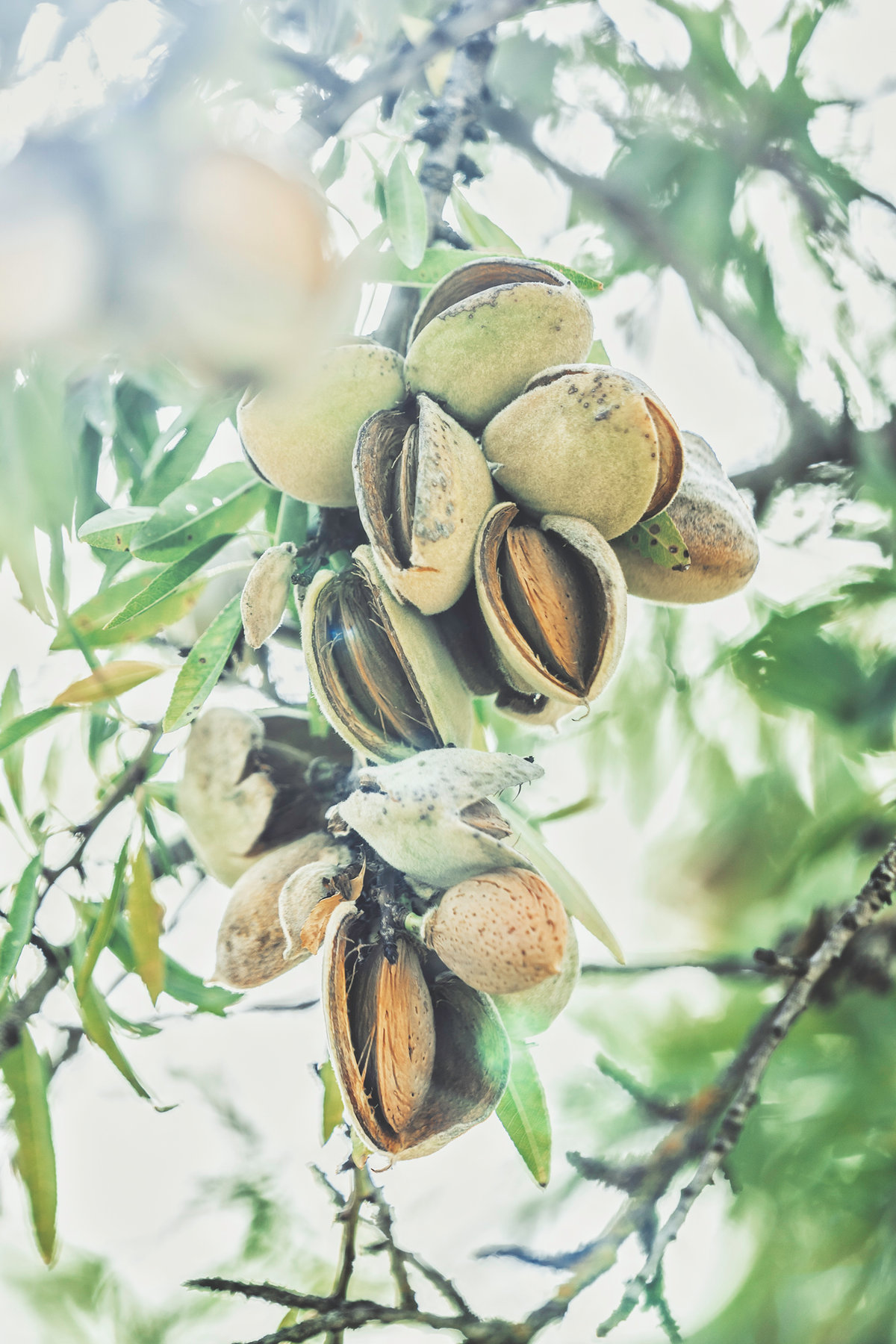
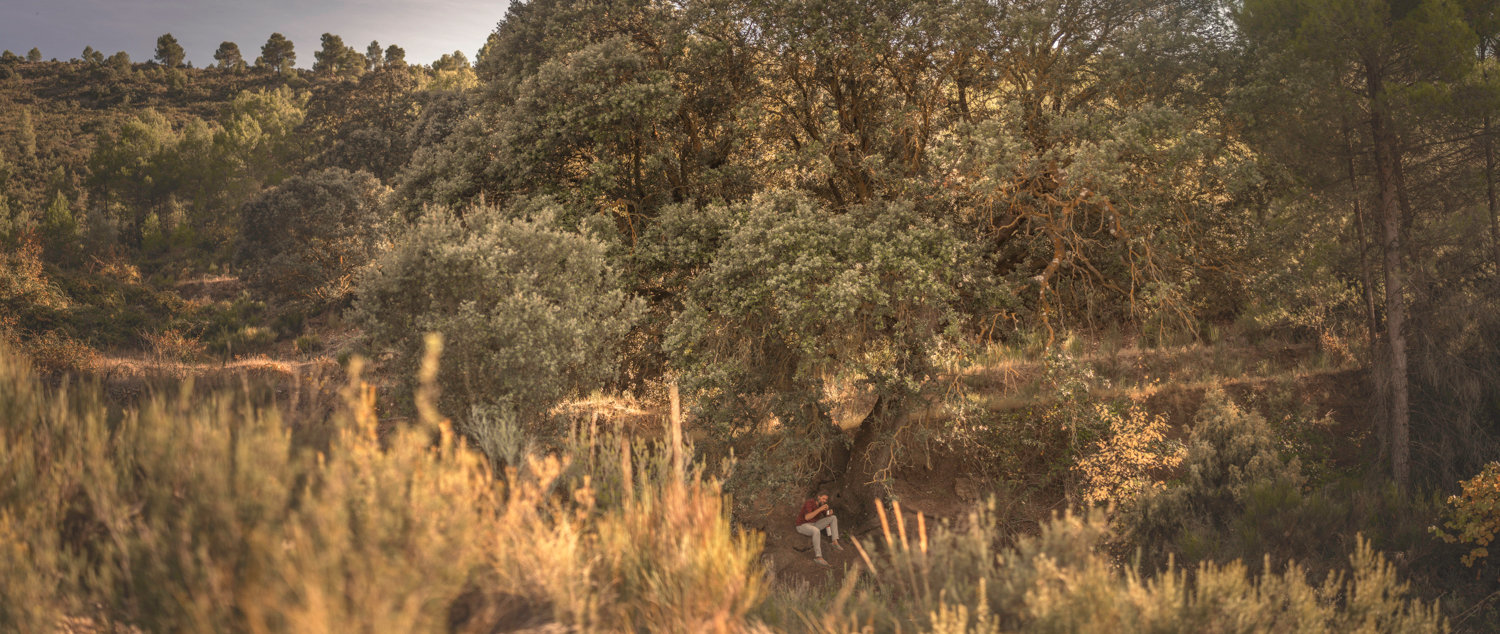
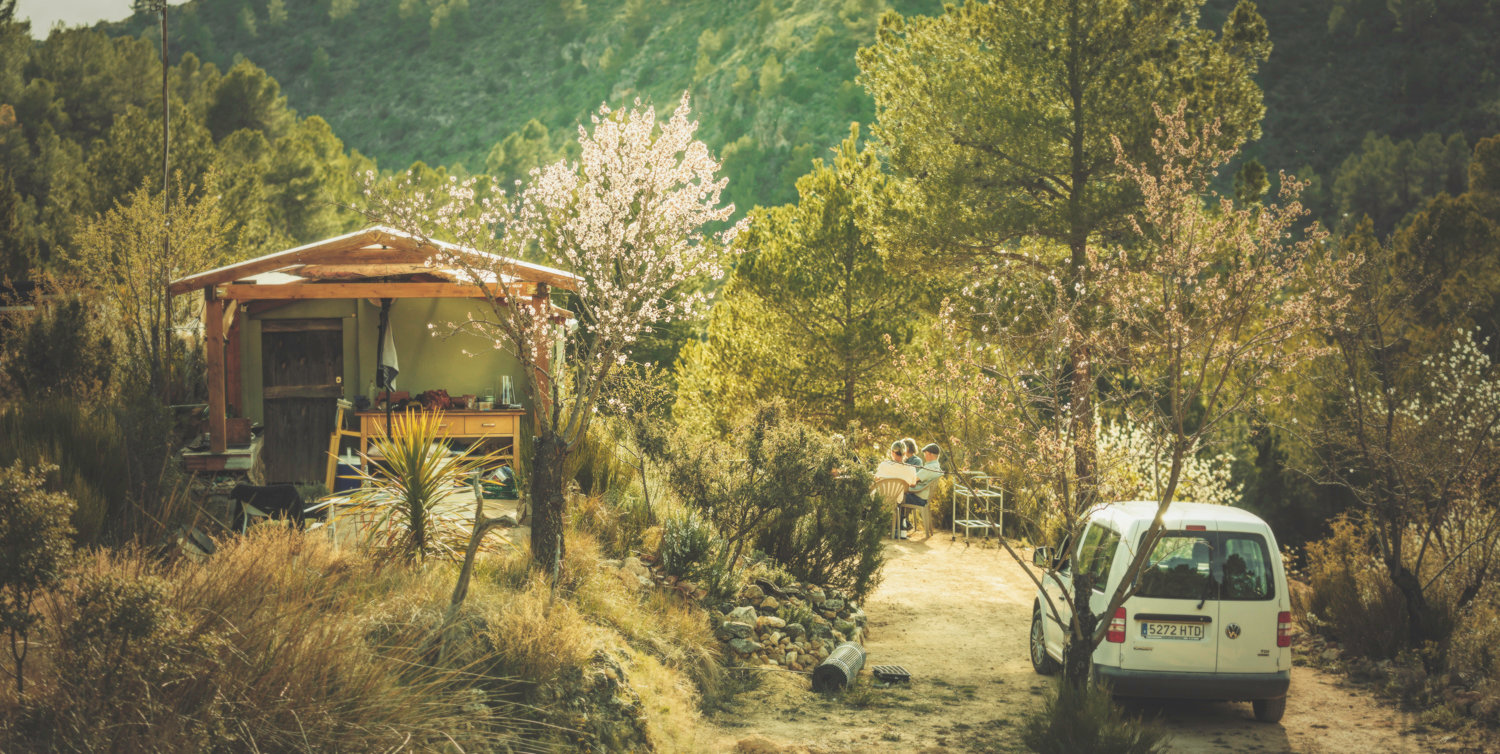
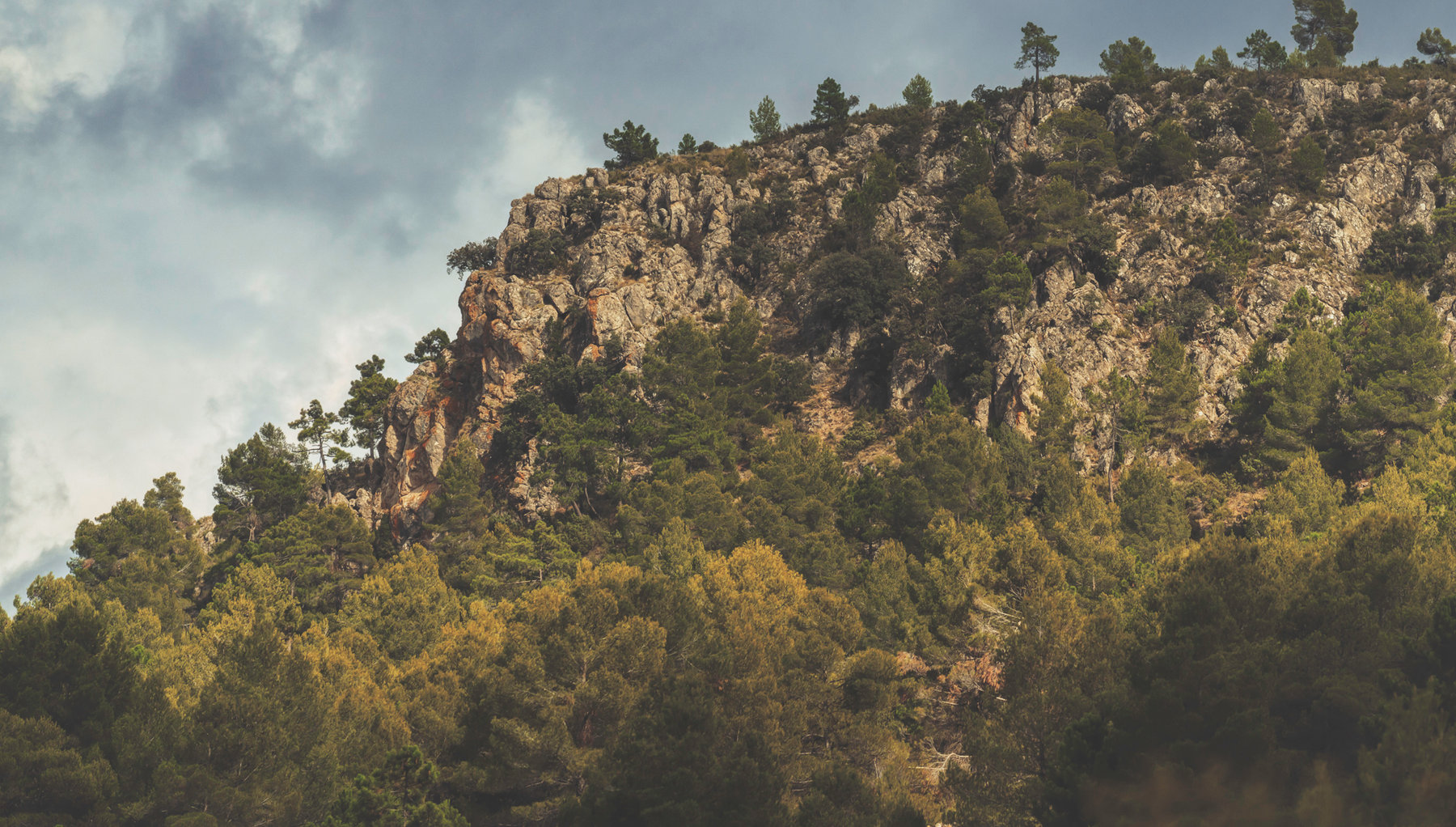
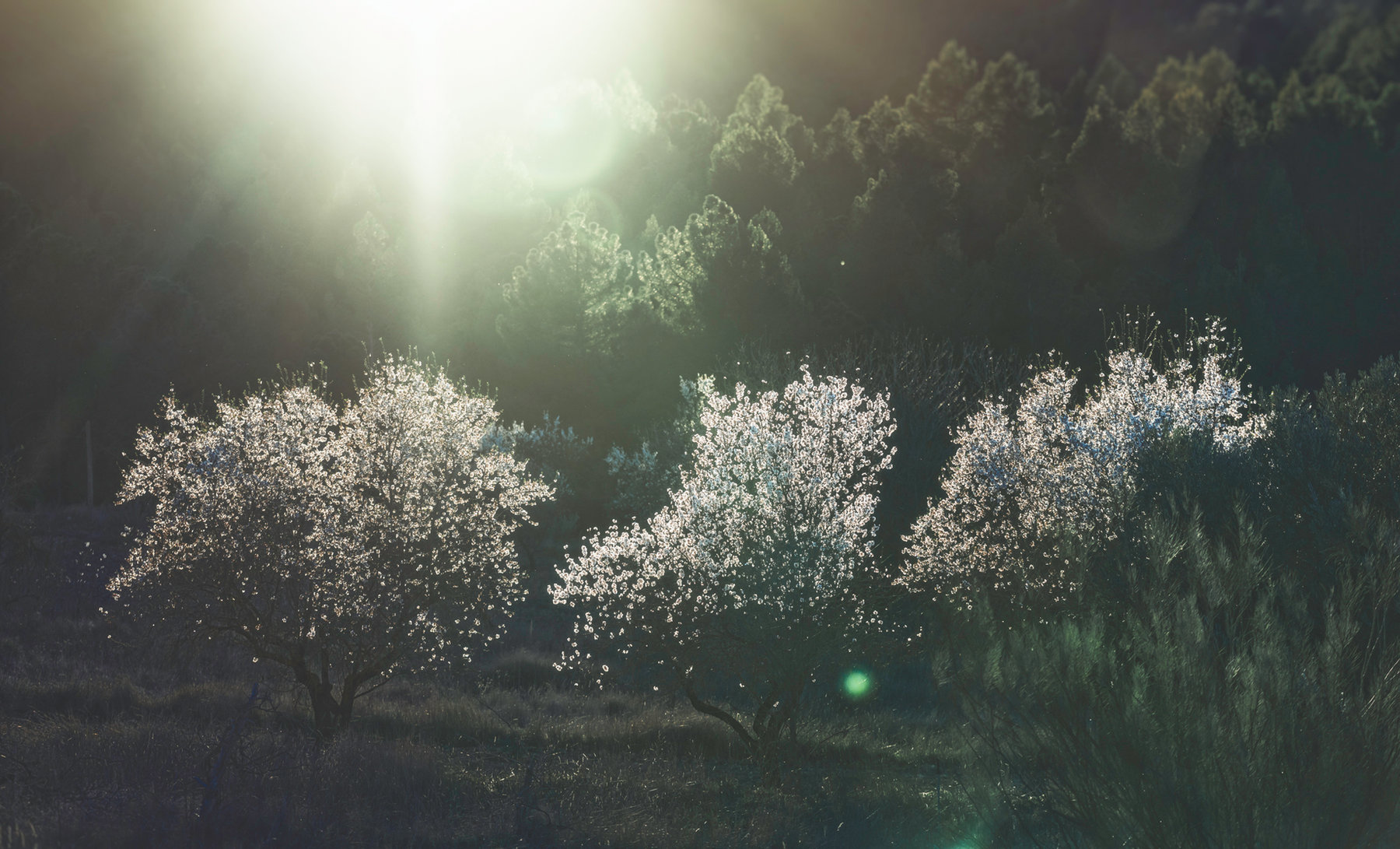
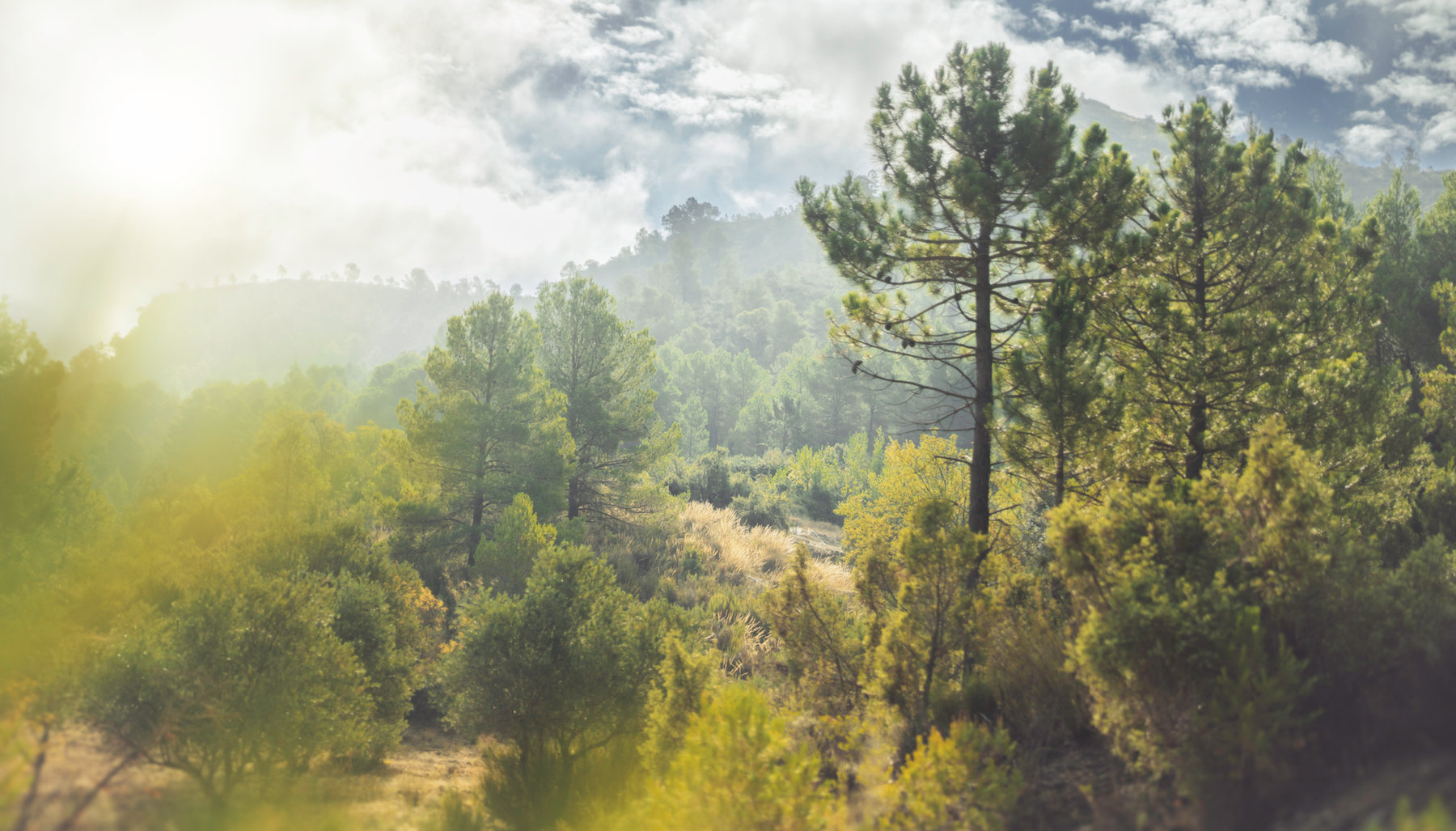
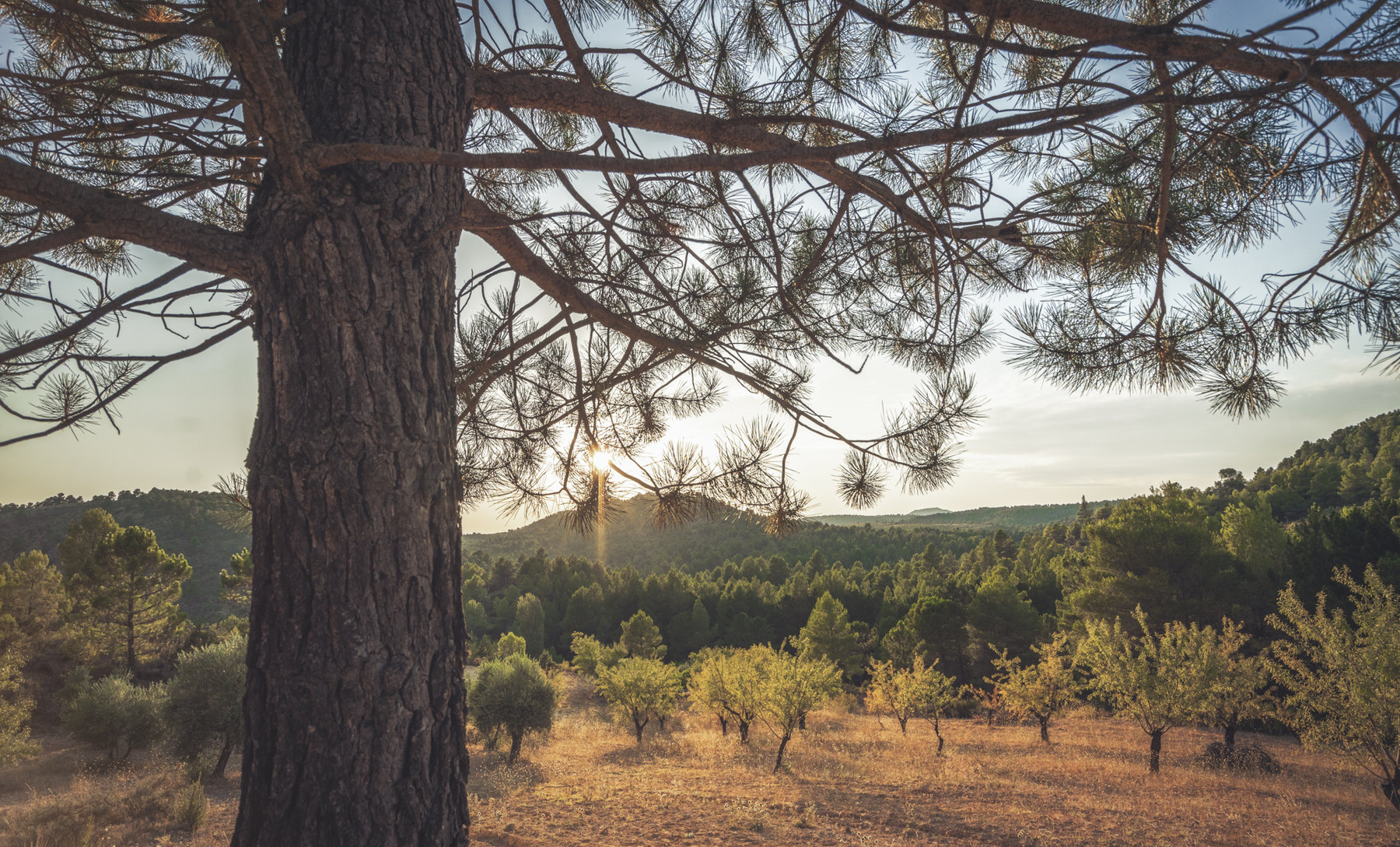
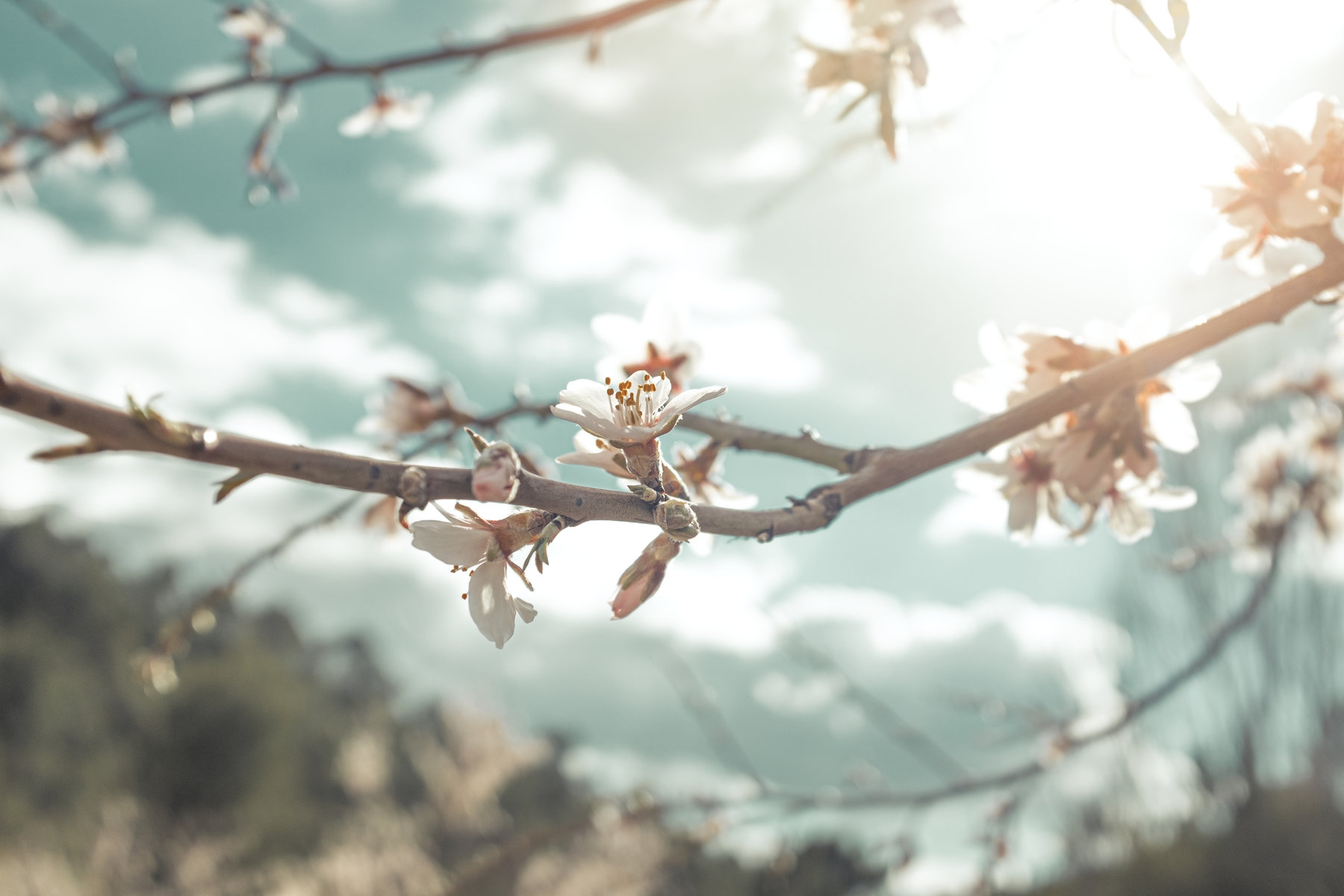
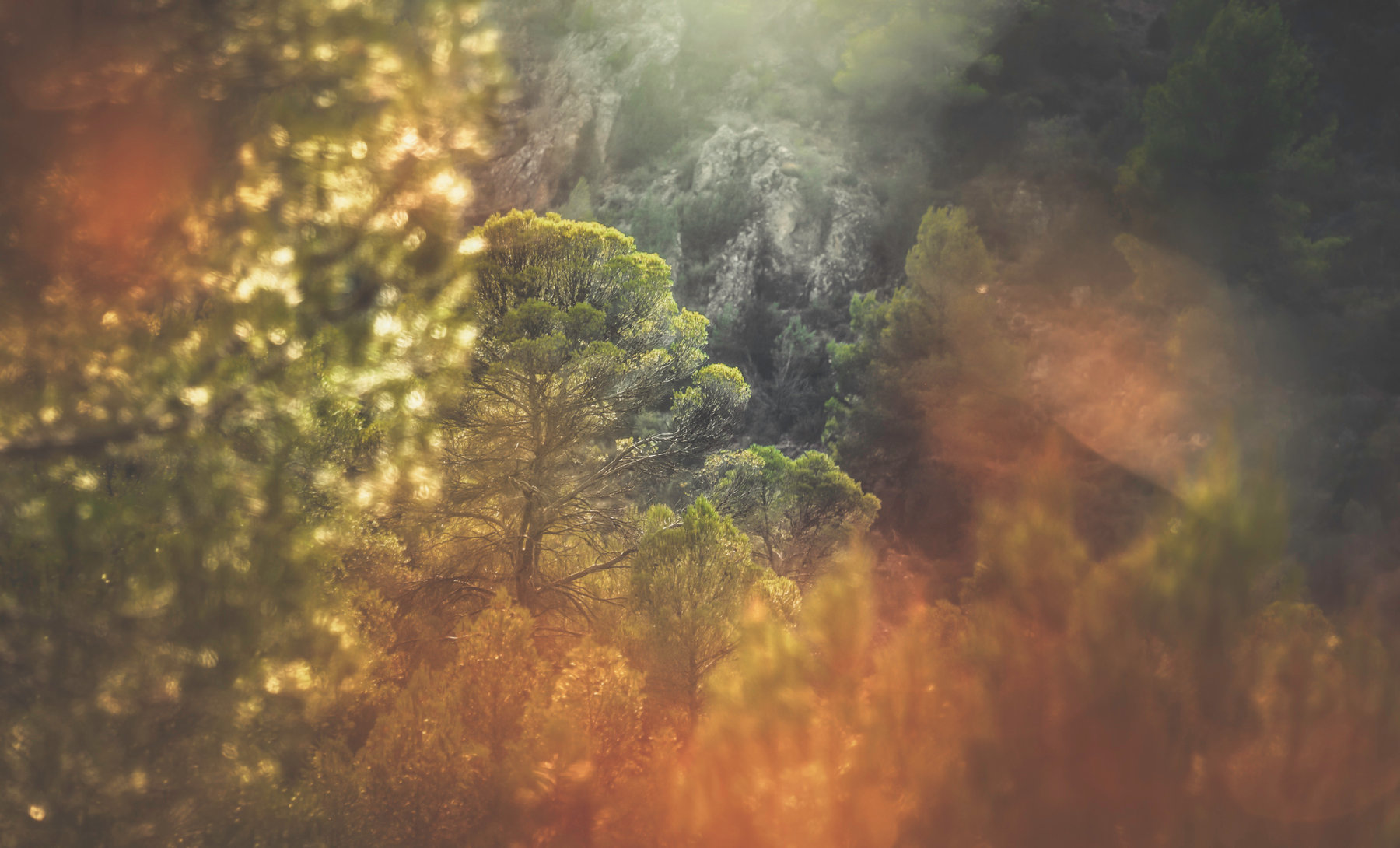
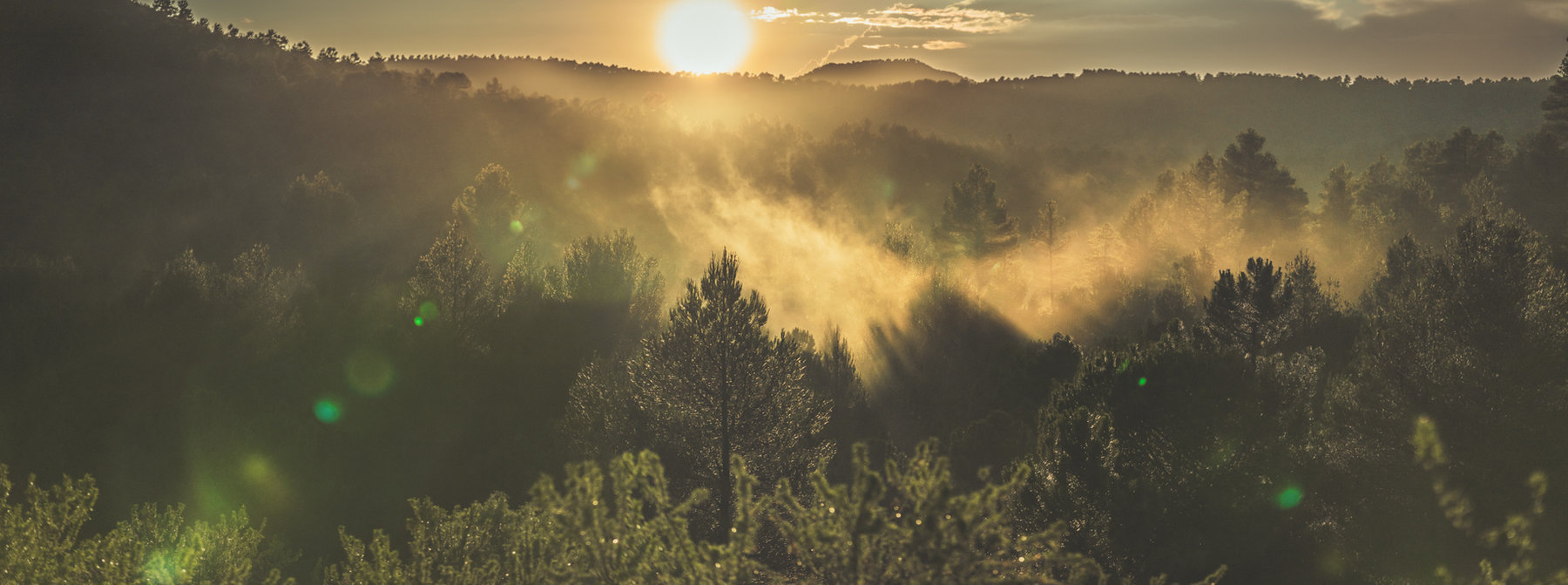
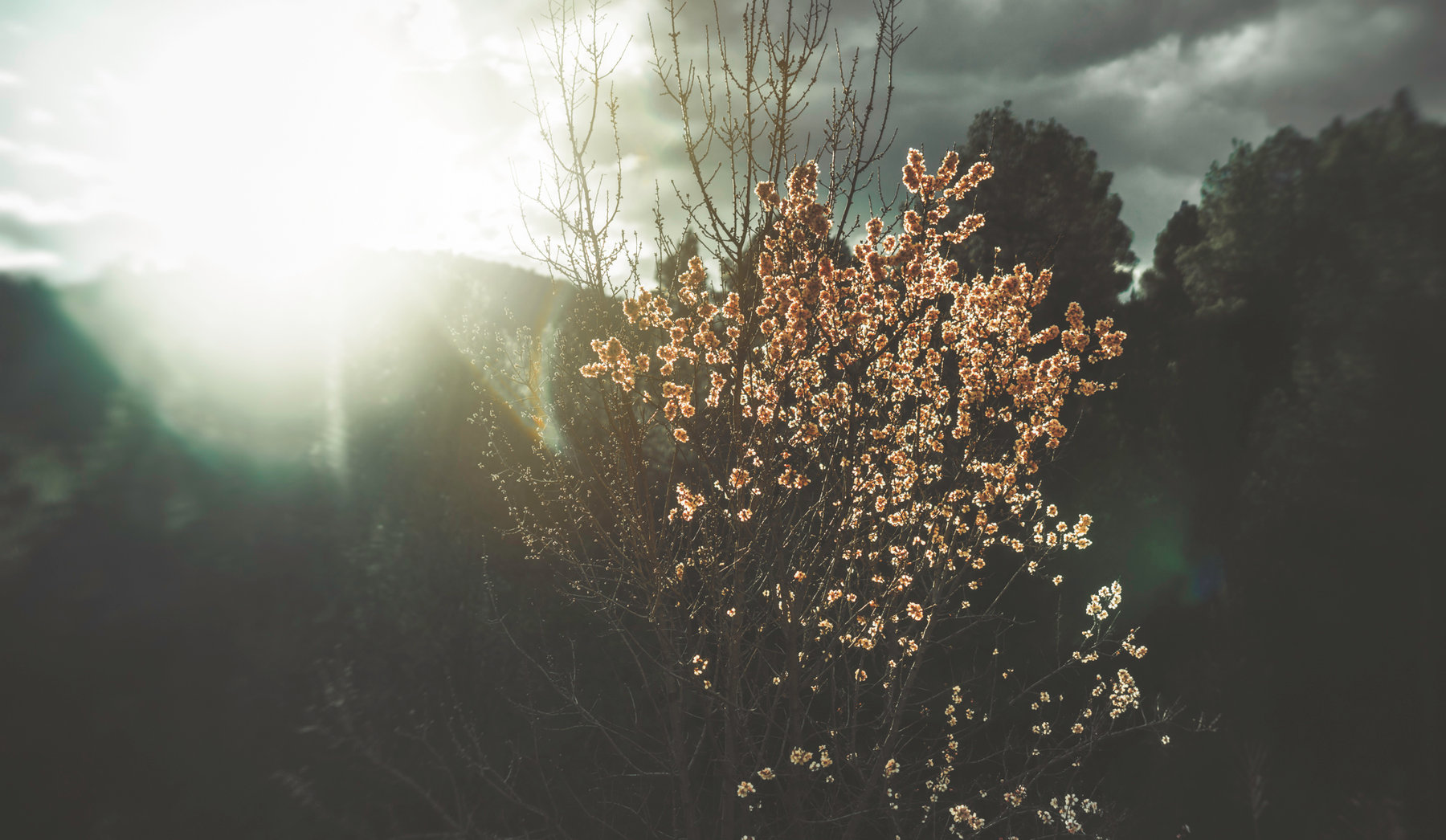
The land covers around 38,000 m² of rural Castilla-La Mancha, in the mountains near Riópar, tucked away in a secluded valley surrounded by vast forests. It offers complete privacy and, especially when the almond trees are in blossom, feels almost like something out of a fairy tale. The influence of Moorish culture is still visible in the ancient irrigation channels and terraced fields, which we're gradually rediscovering and restoring.
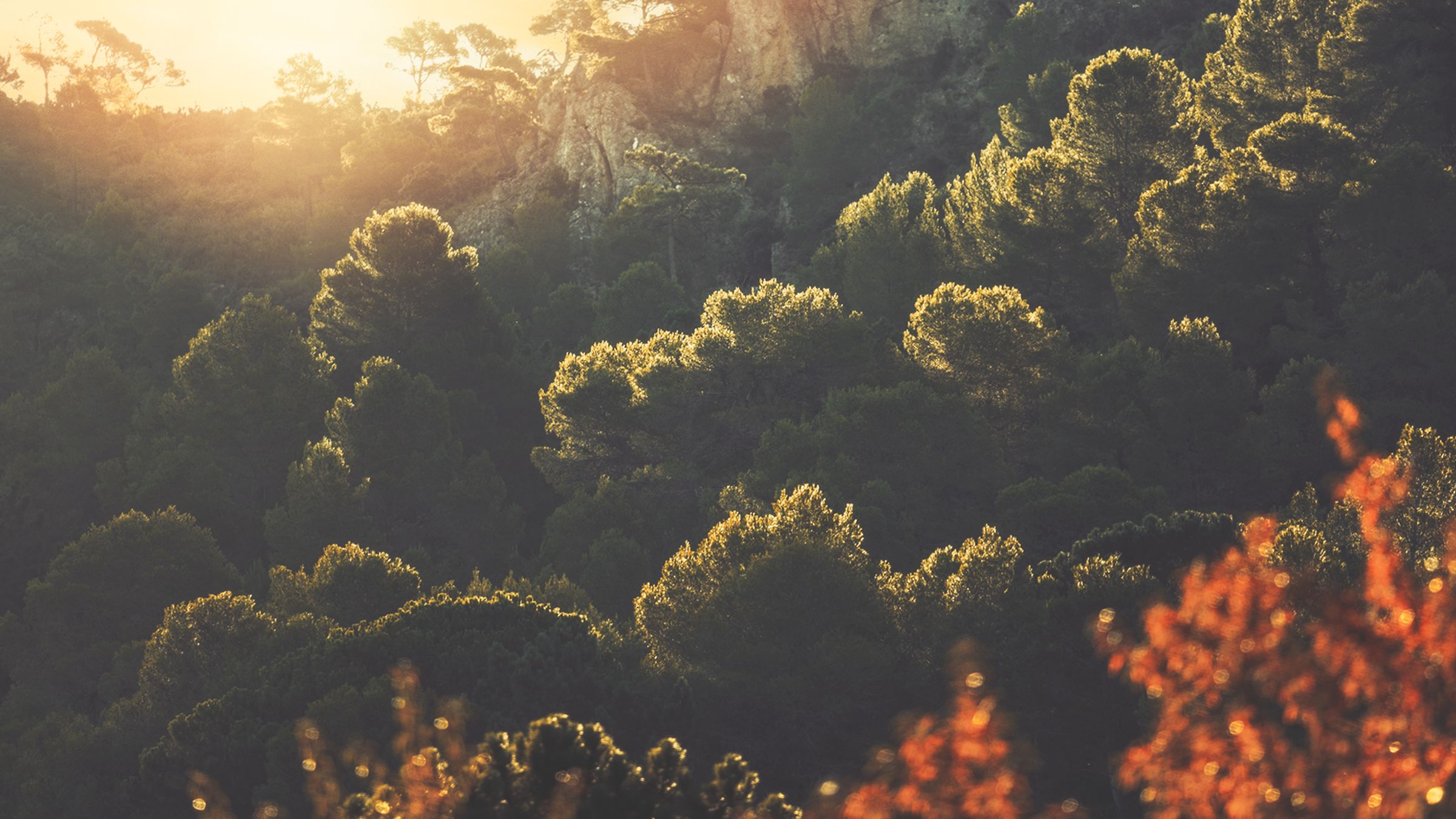
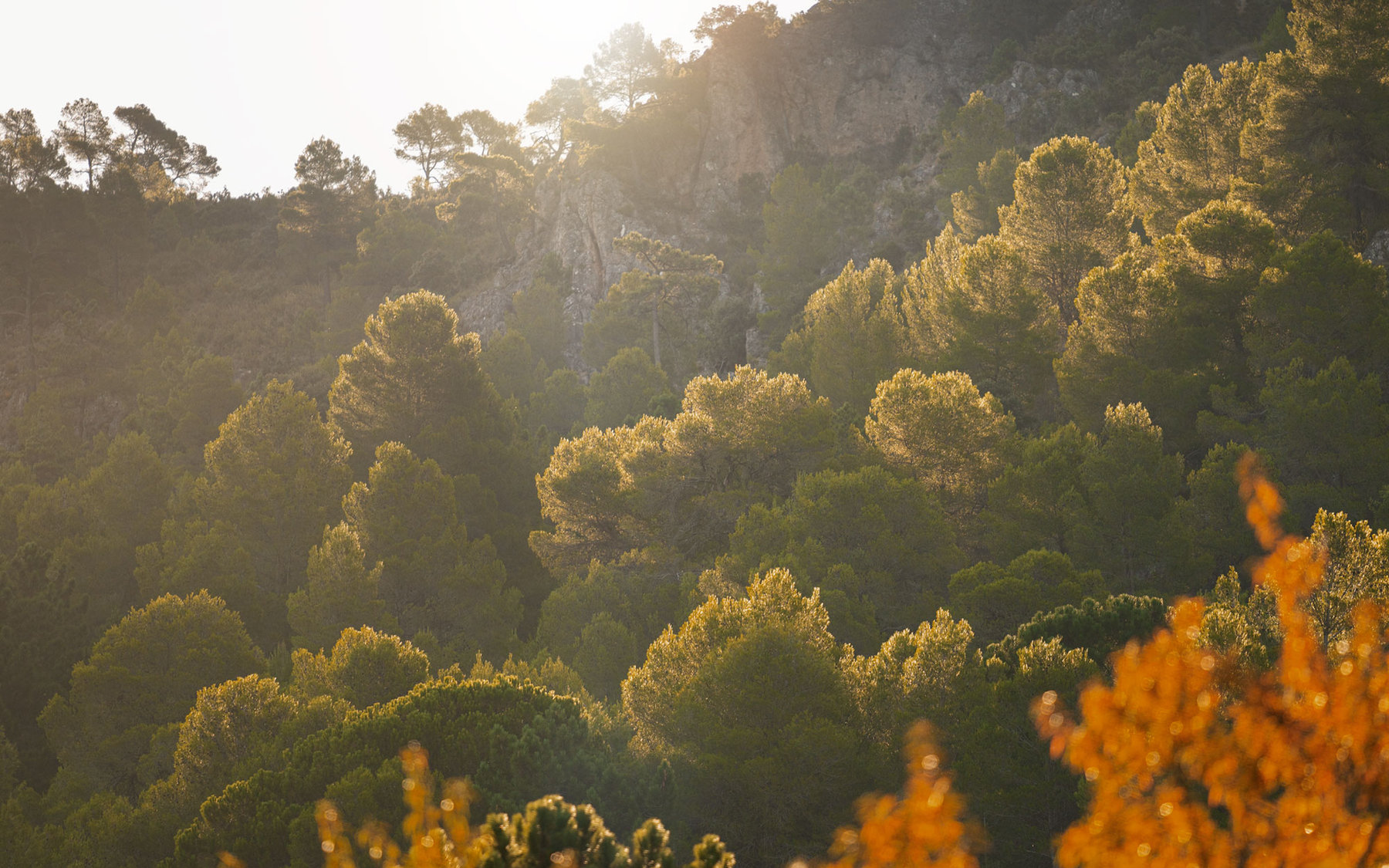
With an elevation change of more than sixty metres and sitting just under 1,000 metres above sea level, the land lies within what is often called the “lungs of Spain”, bordering a protected natural park with the beautiful Río Mundo just a short drive away.
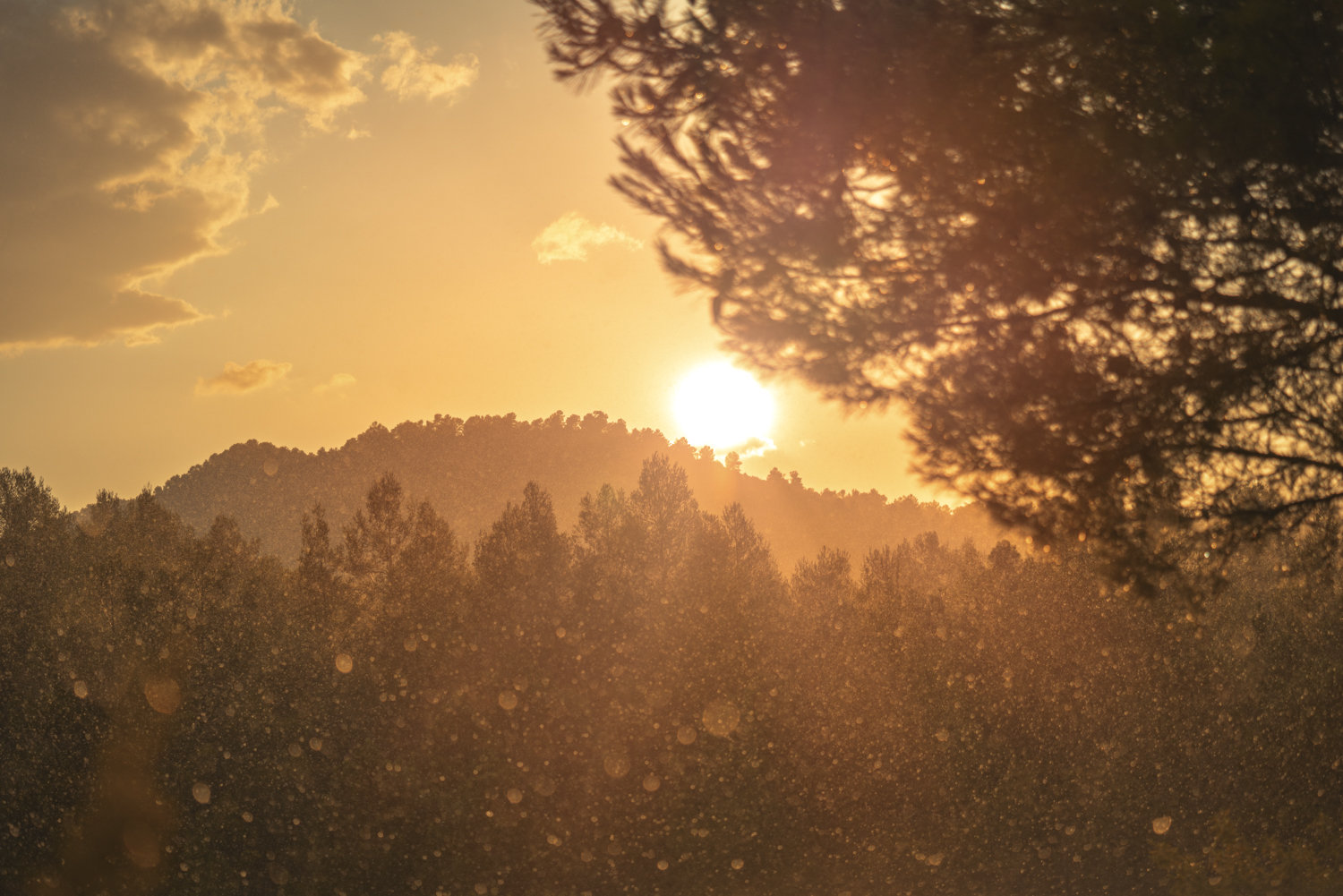
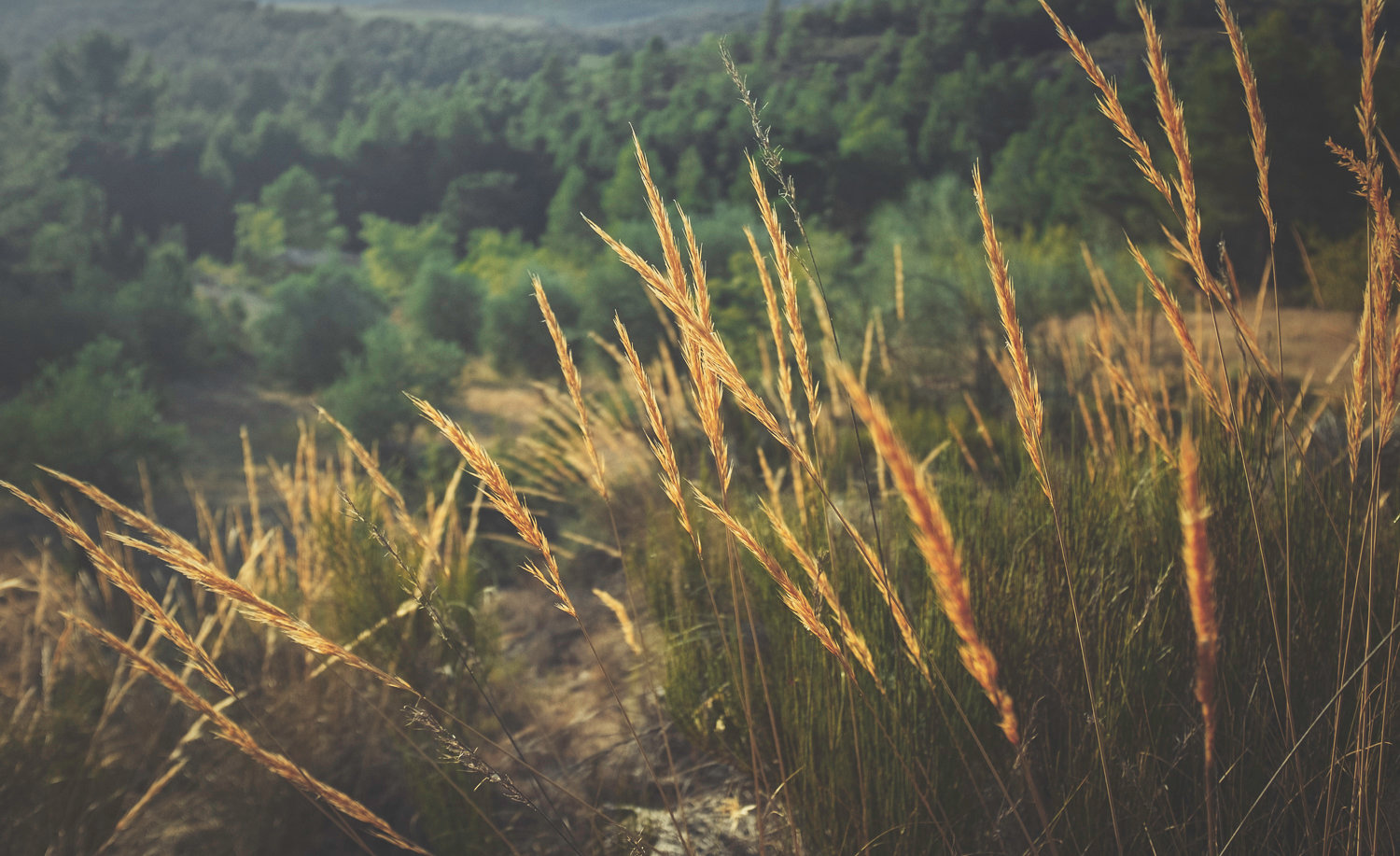
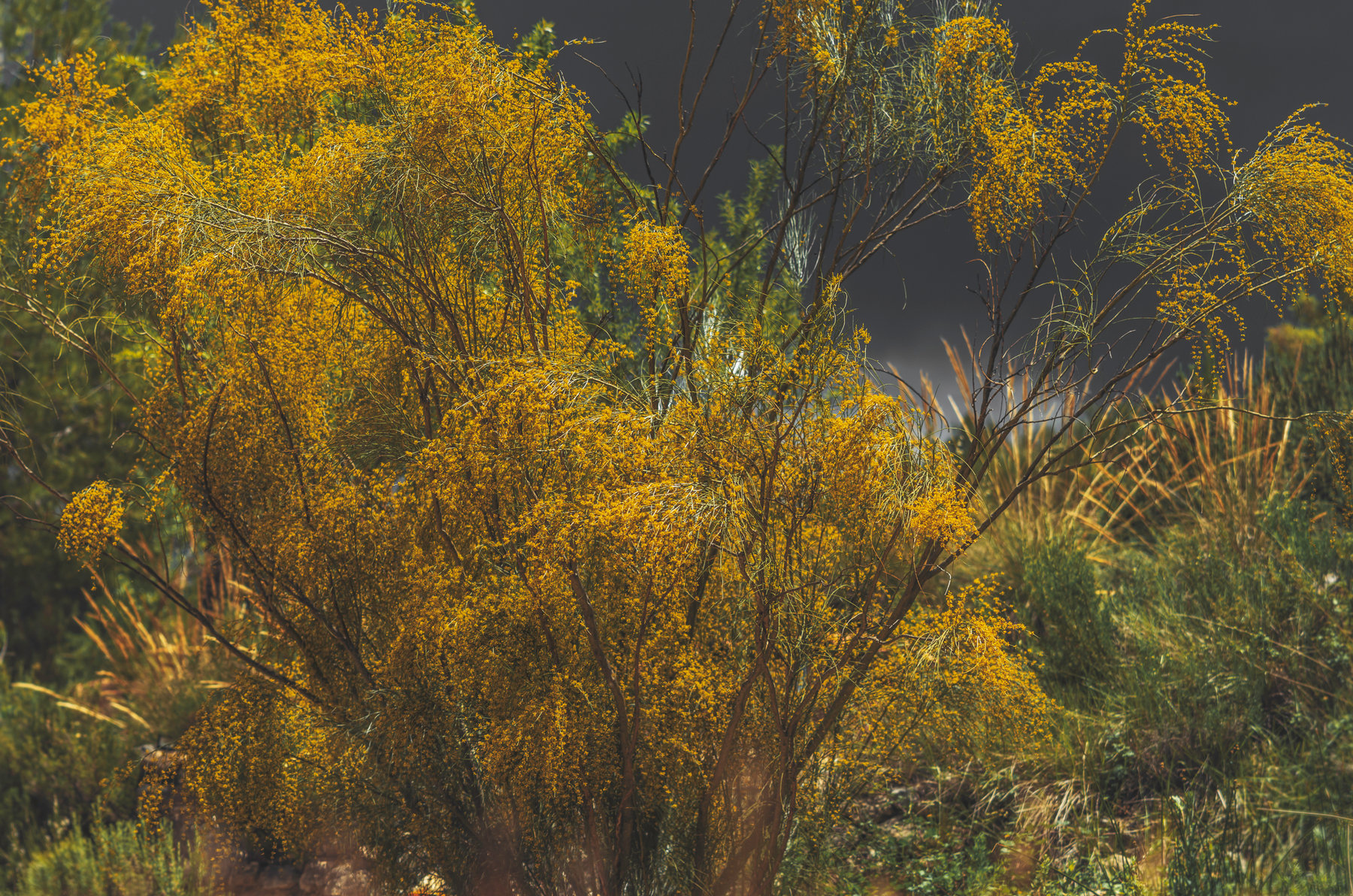
The landscape stays green throughout the year thanks to mature oak trees, pines, thyme, lavender and rosemary. Winters are made for wood fires; summers end with cool evenings beneath a sky full of stars. The temperature differences are large: hot, dry summers, and winter nights that can drop to around -9 °C.
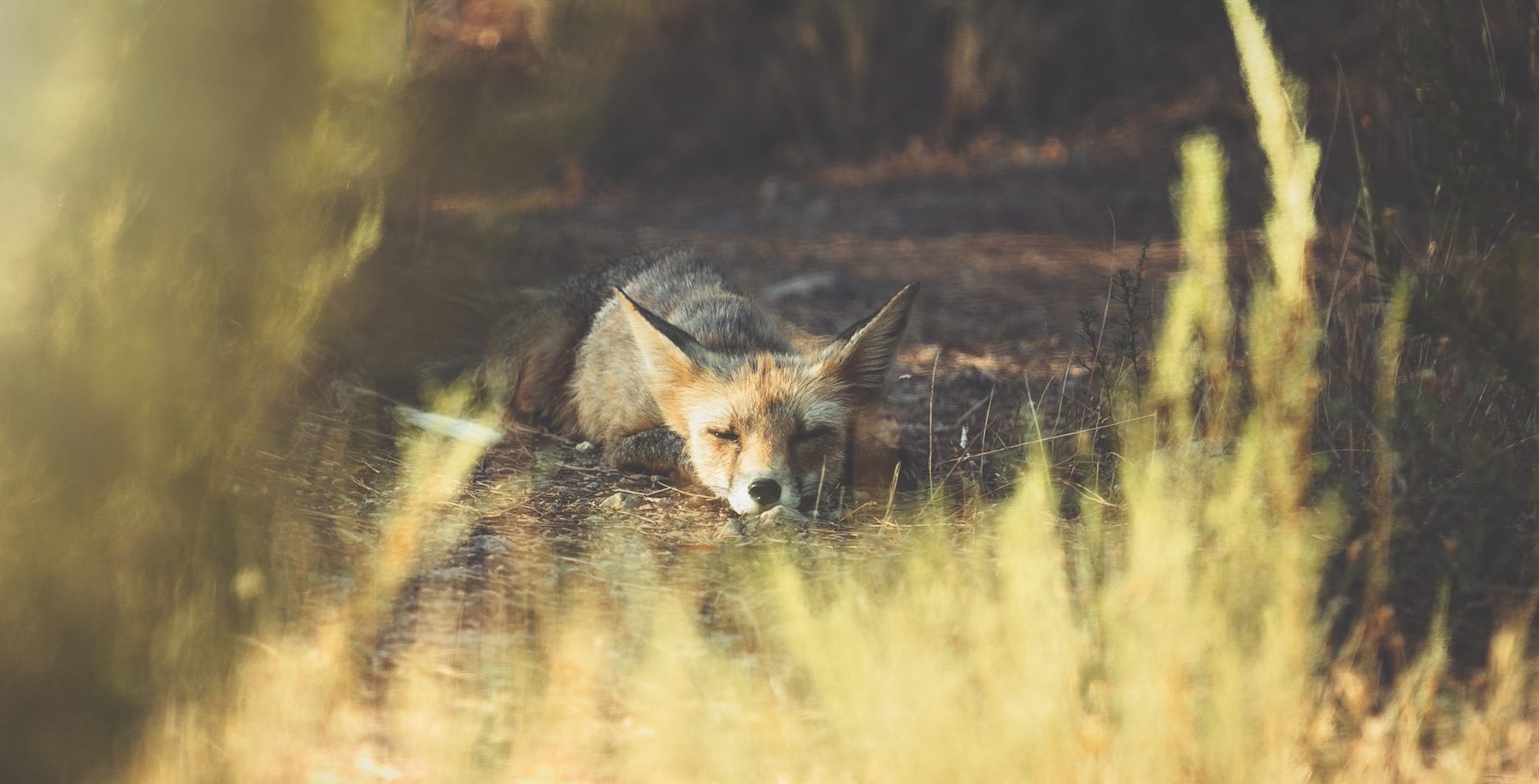
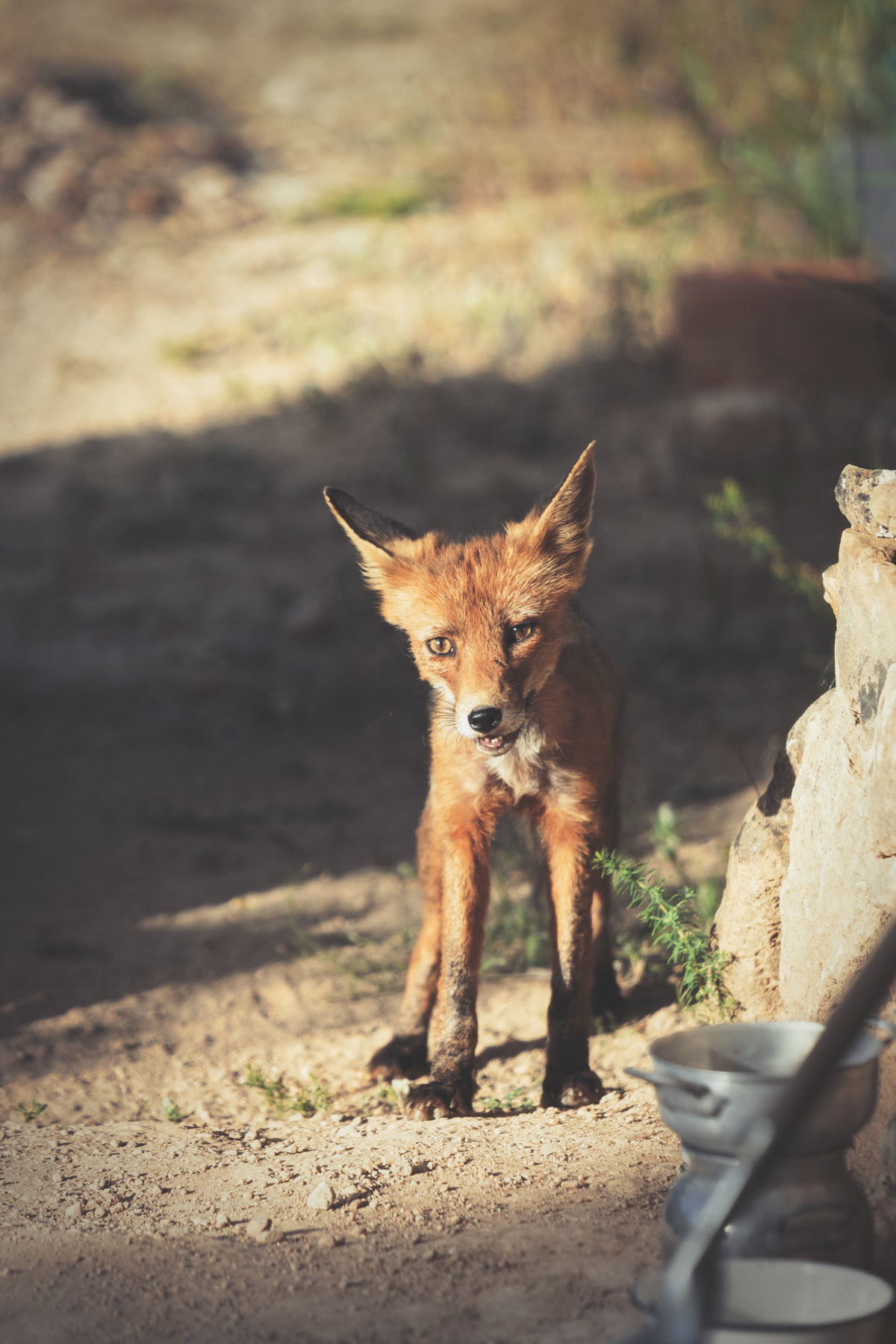
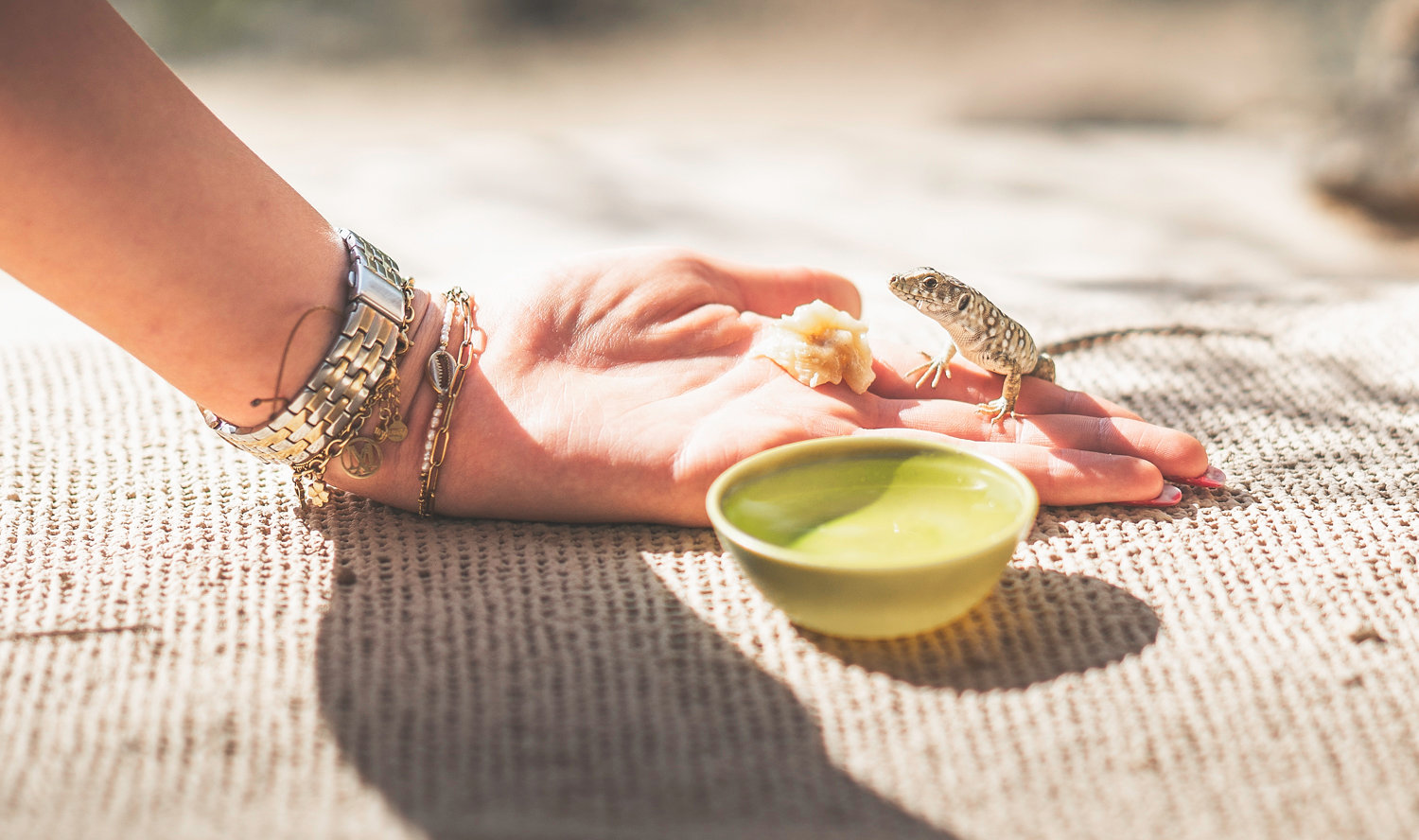
The natural slopes create different microclimates that we are only beginning to understand. There is wildlife, and a lot of spontaneous regeneration.
And there is room to grow. Much of the valley is still owned by an older generation of locals, whose children have built their lives in the city and have little interest in working the land. Several plots in the valley are already up for sale, and more are likely to follow, which makes it possible for the community to grow gradually, with neighbours who share the same idea.
What grows here
A surprisingly good starting ecosystem.
Quite a lot grows here naturally, and young almond trees are regenerating spontaneously all over the land. Some of the existing fruit trees produce surprisingly little fruit, though. We would like to understand why, rather than simply planting more.
- Mature almond trees around 100
- Olive trees around 20, doing well
- Oaks some of them ancient
- Black pines, poplars and junipers
- Fig, plum, walnut and cherry trees
- Pear and apple trees
- Roses
- Blackberries lots of them
- Rosemary, thyme and lavender everywhere
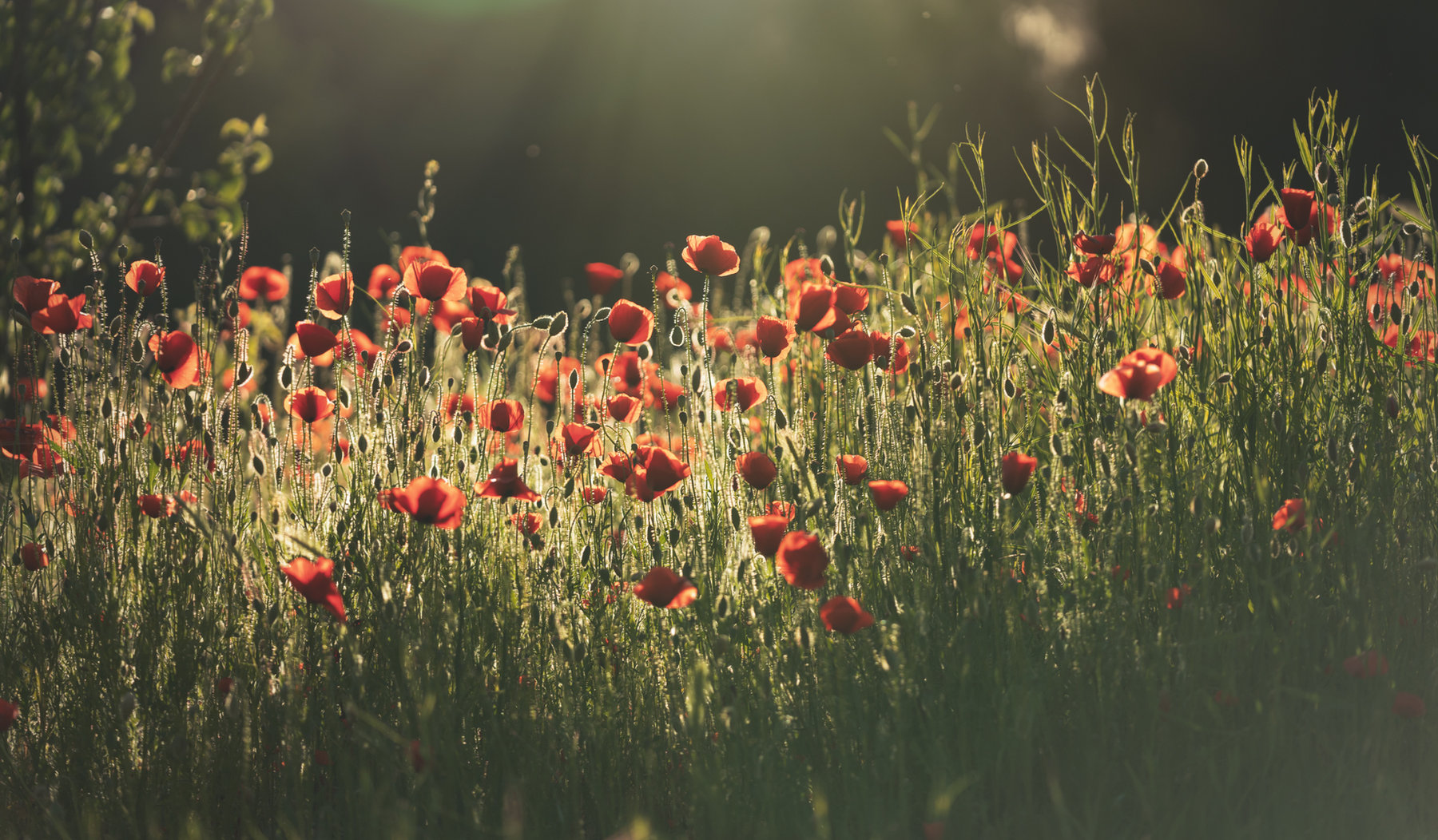
- Wildflowers lots of them
- Young almond trees regenerating on their own
Water
A spring, and the old acequias.
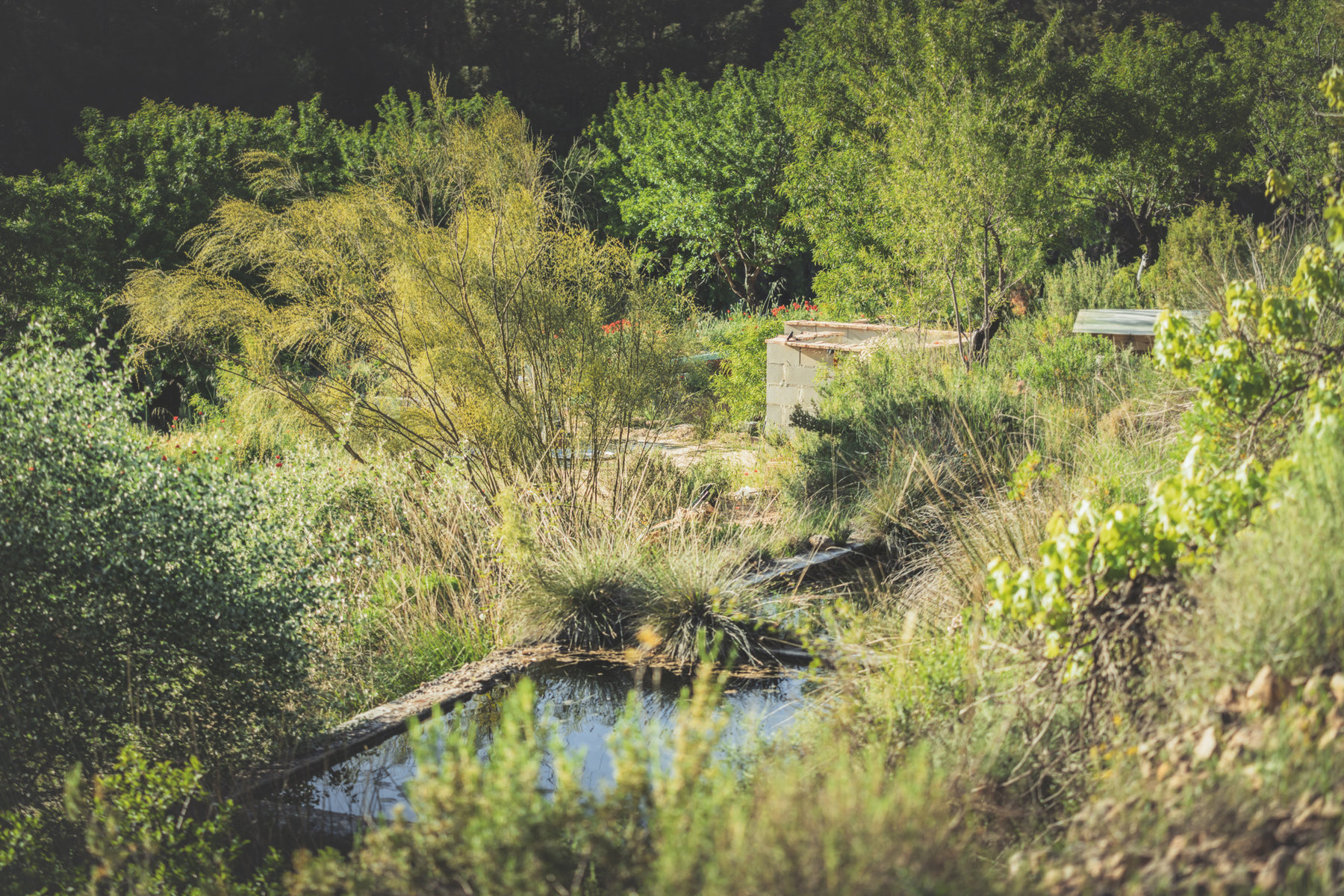
There is spring water on the land, and the Moorish-style terraces still carry their water channels, the acequias.
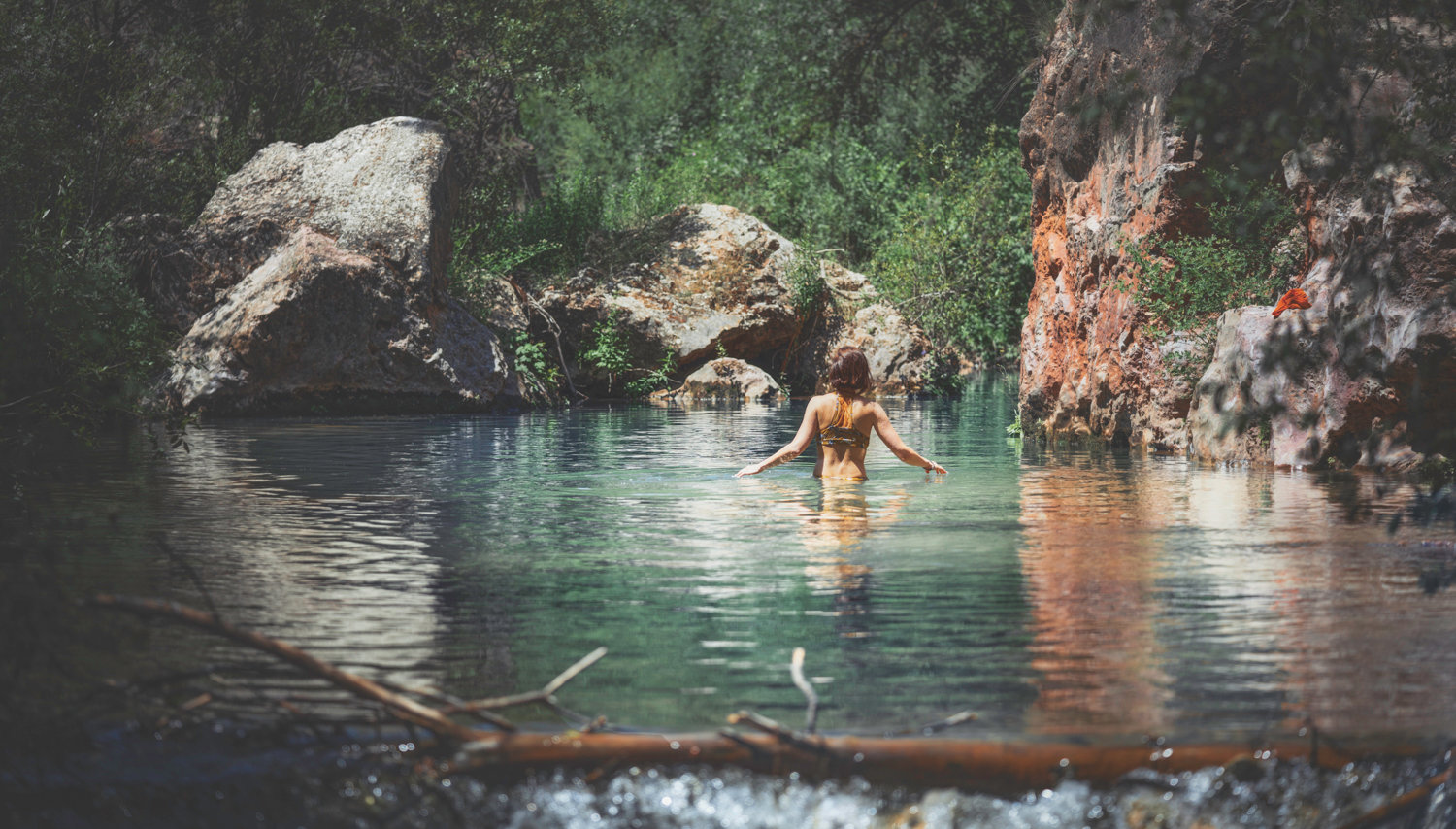
We are interested in developing a much more integrated water system: harvesting rainwater, slowing it down and letting it infiltrate, with swales, small watercourses and ponds that distribute water through the landscape rather than simply irrigating individual plants. A natural swimming pond is currently under construction.
What's here now
Built one step at a time since 2021.
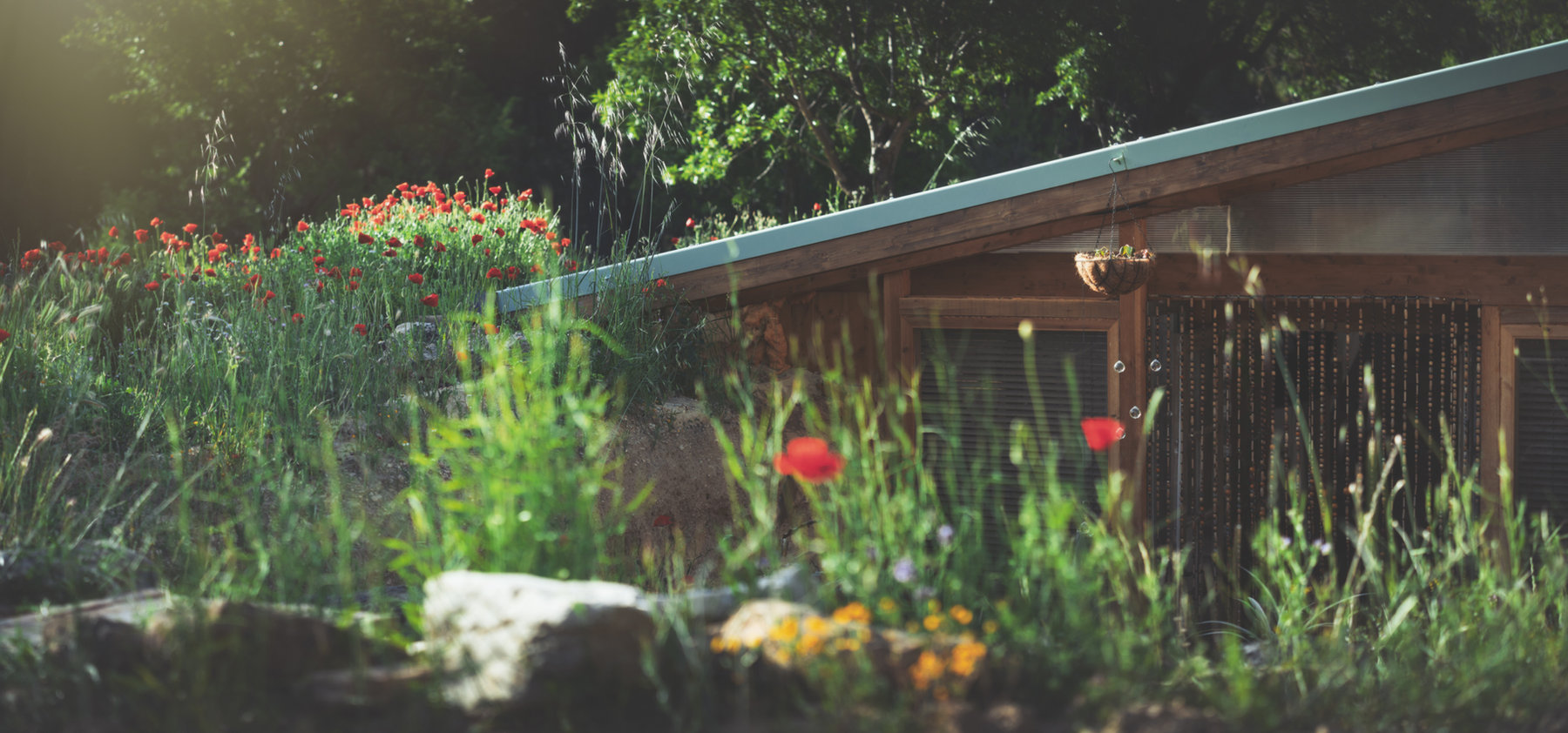
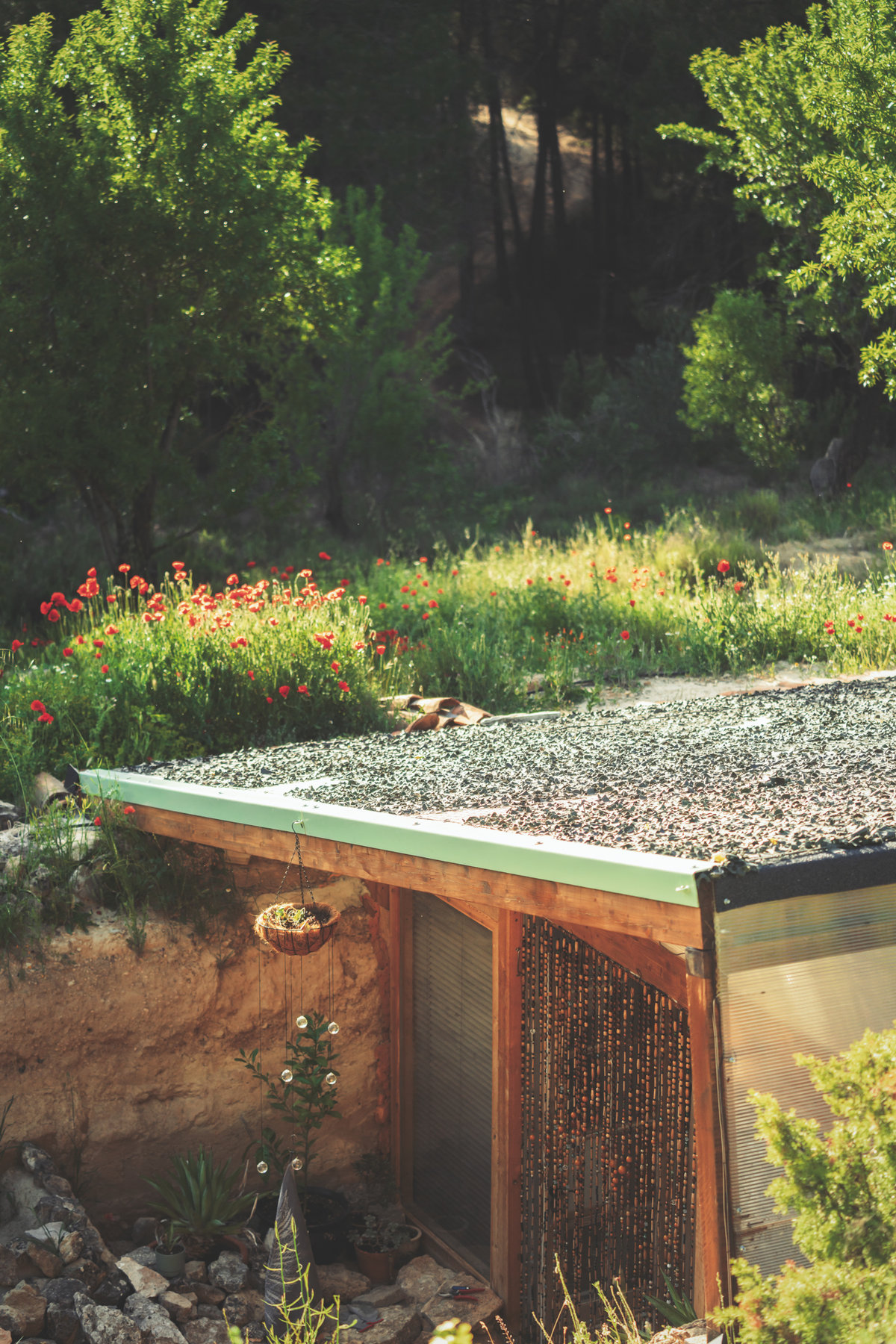
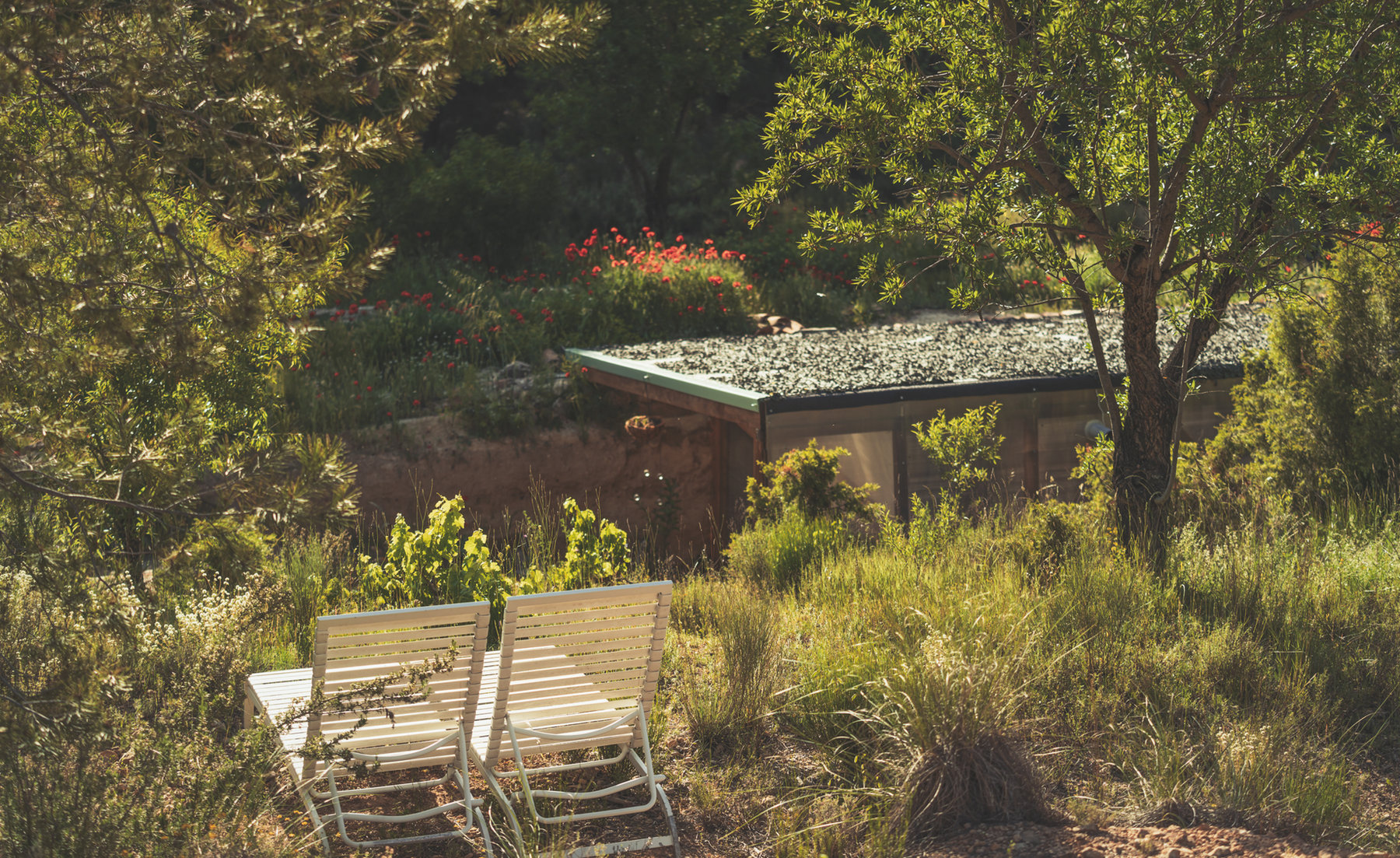
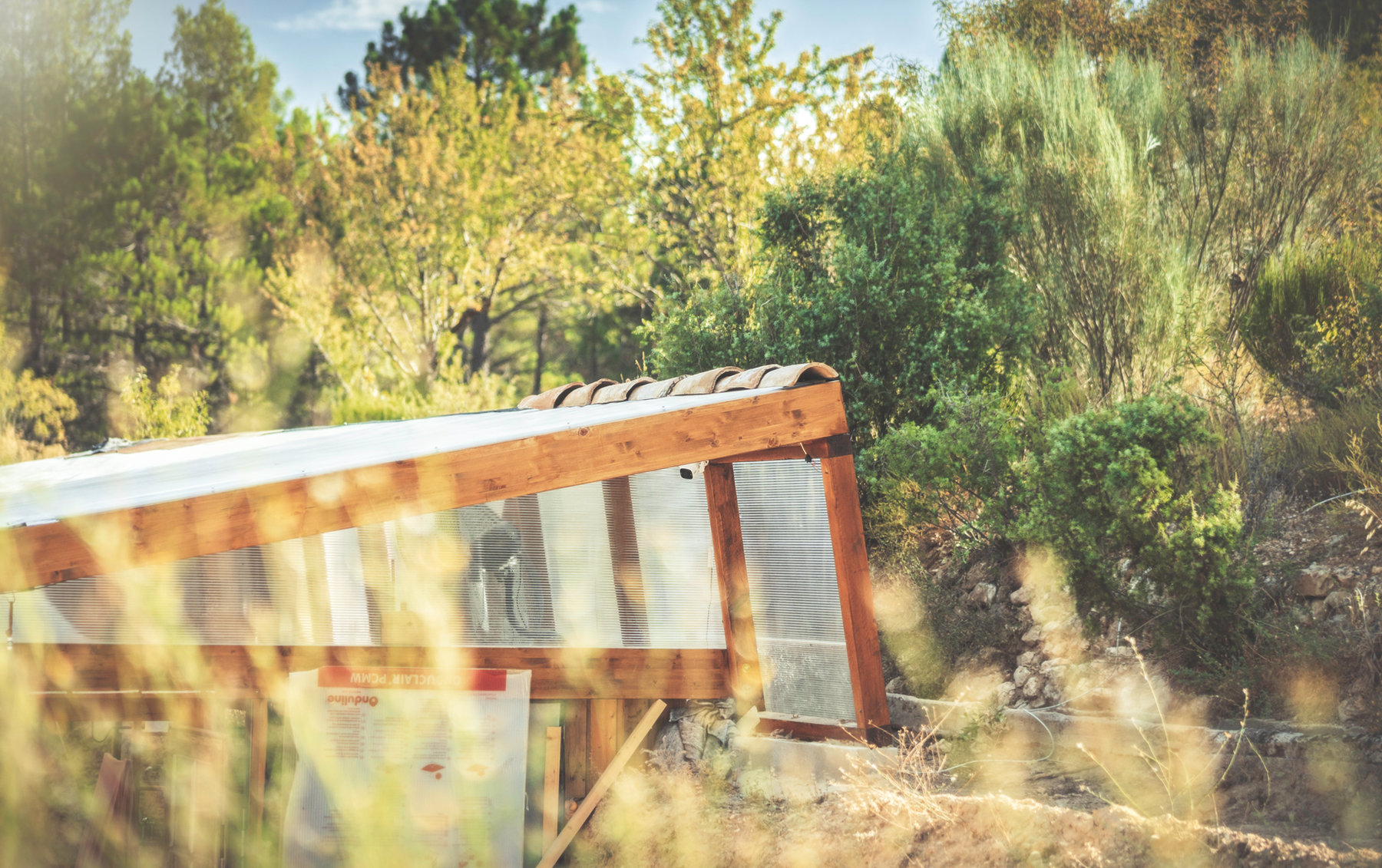
We're building this place one step at a time. While waiting for our building permit (which has now been approved), we restored an old shepherd's hut, adding a porch, an outdoor kitchen, fresh spring water and a fridge. Today there's also a walipini with a wood-burning stove and toilet, a spacious outdoor shower, two large nurseries, a well-equipped workshop and just about every tool you'd need for a wild DIY project. A natural swimming pond is currently under construction, and there's still plenty of room for whatever comes next.
The land is already usable and we can spend time there, but it is still very much a work in progress rather than a finished place. We have a permit, and are looking at how to develop the permitted volume in the most sensible way.
- Spring water
- Solar power reliable electricity
- Starlink internet
- Restored shepherd's hut with porch and outdoor kitchen
- Walipini greenhouse with wood-burning stove and toilet
- Outdoor shower
- Two large nurseries
- Workshop and tools
- Building permit approved
- Natural swimming pond under construction
The coming twelve months
The land comes first.
At this point our main interest is less in adding buildings and more in understanding and developing the land itself. We want the landscape to become the foundation, rather than the buildings being the starting point.
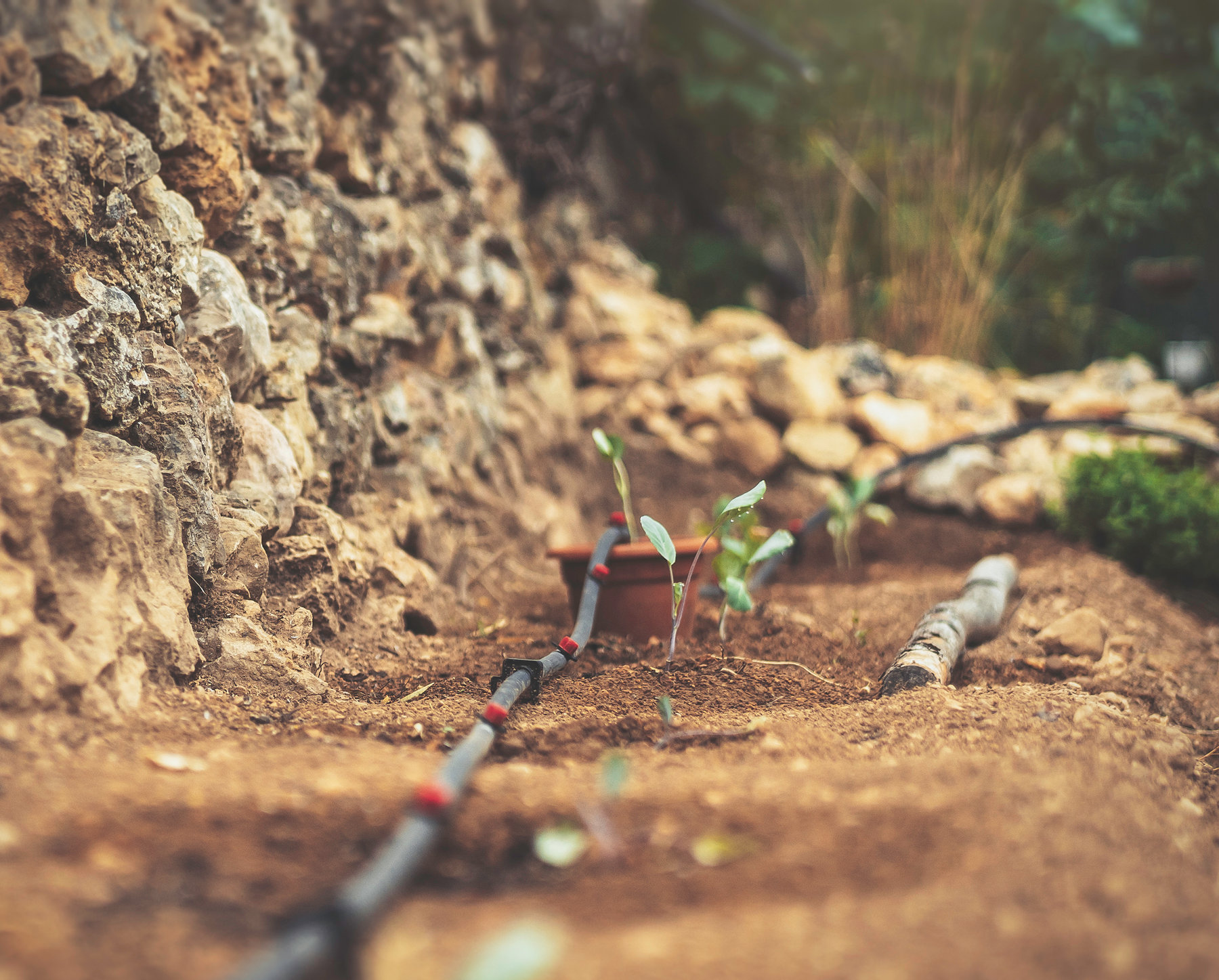
- Vegetable garden
- Fruit and food forest
- Water collection and distribution
- Swales, channels and infiltration
- Native tree planting
- Soil improvement
- Biodiversity
- Understanding what already grows, and why
We are interested in designing this as a permaculture system rather than simply creating a productive garden. Because the starting ecosystem is already good, we would like to observe and build upon what is there rather than impose a completely new design.
We are there regularly, but our documentary work also means we spend substantial periods away, so the planning has to work with that reality. The land is self-funded for now. We are not trying to make it generate an immediate return, which gives us the freedom to take our time and decide based on what we actually want the place to become.
What it could become
It grows with the people who become part of it.
In the longer term we still like the idea of a small number of places for people to stay, creative residencies and workshops, communal spaces and some form of knowledge exchange. But the landscape needs to come first: we don't want to decide what the place is commercially and then make the landscape fit around it.
As the place evolves, we'd love to create a venue for workshops, creative residencies and small gatherings. We imagine it becoming a place where people can teach, learn and make together. Photographers, writers, filmmakers, designers, researchers and other makers often value uninterrupted time, meaningful surroundings and a sense of purpose far more than a big accommodation.
We see this place as a living landscape where nature restoration, creativity, hospitality and small-scale entrepreneurship reinforce one another. We're dreaming of a remote studio, an open-air cinema and an artist's workshop. Friends have talked about creating a furniture studio, a jewellery workshop, guided wellness walks and ideas we haven't even imagined yet. That's what makes a place like this exciting: it grows with the people who become part of it.
What we don't want
Small, quiet, ecological, creative and somewhat difficult to categorise.
- A holiday park
- A conventional campsite or glamping site
- A constant flow of strangers coming and going
- Tourism as the primary purpose
- Lots of units, built simply because we are allowed to
- A landscape arranged for people at the expense of the existing ecology
- Manicured gardens, or a decorative version of “nature”
- Dependence on intensive irrigation, imported landscaping or constant maintenance
- A place people come to purely to consume an experience
- Money as the main decision-making factor
- Giving up privacy, quietness or the feeling of remoteness for income
- A community where you have to be socially available all the time
- Something that looks sustainable but is just another consumption model
More positively: the place should remain small, quiet, ecological, creative and somewhat difficult to categorise. The people who come should have some kind of relationship with it. Not necessarily as permanent residents, but as regulars, contributors, collaborators, or people who genuinely want to engage with what is happening here.
That goes back to the original thinking behind this place: a Third Place with a small group of regulars, rather than a conventional accommodation business.
Who we're looking for
The regulars of this Third Place.
Nature lovers and naturalists. City dwellers looking to slow down from time to time. Remote workers, builders, time shareholders and house swappers. Curious WWOOFers, hikers and campers are just as welcome.
Above all, we're looking for people who'd like to return. People who enjoy contributing to a place that's still unfolding. We believe the best communities grow slowly, so we'd simply like to get to know each other first, and then see what we can create together.
Regulars are the people who return to a Third Place regularly. Through their presence, they help shape its atmosphere, culture and character.
How we work together
One valley, one foundation, many small ventures.
We want to set up a foundation for the valley, as the partnership between everyone who is part of it. Its board members are the stakeholders themselves: the people who each run a venture here. The people who carry the place are the people who decide about it.
We call it our lil’ foundation, where lil’ stands for Low Impact Living: a small, light footprint on the land, and a lot of room for life.
Within that shared structure, every stakeholder runs a small venture of their own. Ours is Ahooha, an activist media company, together with a cabin for focus holidays. A small percentage of what each venture earns goes back into the upkeep and development of the land. How large that percentage is depends on the size of the plot and the kind of venture.
Around them is a wider circle of regulars, who join part-time through one of the stakeholders and contribute to the foundation as well.
It works both ways. What's good for the land is good for our ventures, which are all built on nature, quiet and focus.
- Income earned on the landstays, focus huts, campsite, walks, workshopsmost of it stays with each venture
- a share of incomethe percentage depends on plot size and type of venture
- Shared costsequal per stakeholderWork dayscount towards itRegularsyearly contribution and work days
- The valley foundation
- The land firstwater, soil, trees, biodiversityShared facilitiespaths, tools, water, internet
- what’s good for the land is good for the ventures
Background
Where this comes from.
In 2009, we made the documentary road movie Freedom Ahead, following our journey through a variety of intentional communities. Later, together with friends from the Freedom Ahead project, we created Seeds of Permaculture. Today, we run a small media studio together.
- Freedom Ahead, official trailer
- Seeds of Permaculture, tropical permaculture
- Studio Loerijzer, our media studio